
Deck decor ideas work when the deck is planned like a room, not decorated like a shelf. Zones first, measurements second, pretty things last is the order that separates a finished outdoor room from a pile of nice purchases.
The numbers exist, just not in the galleries. Rug rules, soil weights, electrical code and fire clearances all live in specialist sources, and this page brings them into the decorating conversation.
Every figure here carries its source. Where sources disagree, on lifespans, shade costs and clearances, the disagreement is printed as labelled strands instead of being averaged into a fake certainty.
Deck Decor Ideas in 60 Seconds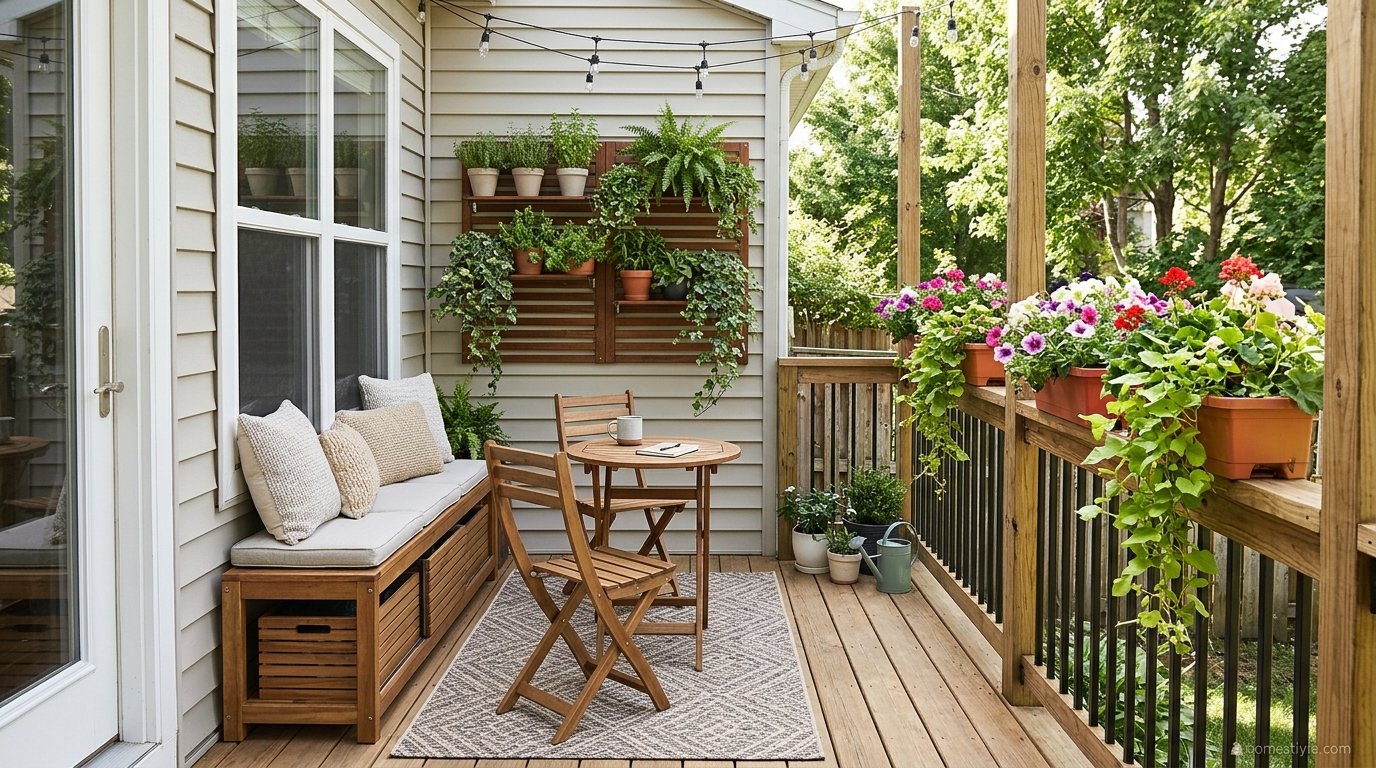
Short answer: zone the deck, size the rug to the zone, match shade to the zone, check weight before beauty, and read fire guidance as strands. That sequence is the whole system in one line.
Dining, lounging and cooking are the three zones. Give each one a footprint, a surface underfoot and its own pool of light, and keep one walking path clear through all three.
The rug rules are simple. Leave a 12 to 18 inch border of bare deck, land at least the front legs of every seat on the rug, and run dining rugs 24 to 36 inches past the table.
The color discipline transfers from indoors. The palette logic behind our sand living room ideas and the layered neutrals in our oatmeal living room ideas apply outside too, with tougher fabrics.
Zone the Deck Before You Buy Anything
Start with a color scheme, then furniture sized to the deck. That is the method stated up front in the Better Homes and Gardens deck decorating ideas, and the order matters because the scheme makes the later choices for you.
A rug is what makes a zone real. It draws the boundary guests can see, anchors the furniture group, and gives the eye a floor; without it, a zone is just a wish.
The Three Zones: Dining, Lounging, Cooking
Dining takes the flat end near the kitchen door. Short carrying distance for hot dishes, a table footprint with pull out room, and shade overhead at midday make this zone the easiest to place.
Cooking is a zone, not a corner. The grill needs its own clear footprint on a mat, working room on both sides, and a path to the kitchen that never crosses the lounging group.
One accent color ties the zones together. Cushions, planters and one textile repeat the same hue in each zone, the way our clay living room ideas use a single earthy tone to hold a whole room together.
Measurements: Walkways, Dining Footprints, Table Sizes
Keep walkways near 36 inches where the deck allows. That width lets one person pass a seated guest without turning sideways, and it is the first measurement the galleries never give.
A dining footprint is the table plus 24 to 36 inches per side. Chairs need that ring to pull out and sit down; measure the footprint first and let it choose the table size.
Rugs: The Zone You Can Roll Out
An outdoor rug is the fastest zone you can buy. It lands in an afternoon, defines the seating group, softens the boards underfoot and quiets a hard surfaced deck.
Size it to the furniture group, not the deck boards. The sizing rules in the Rugs Direct guide are text only here, but its three numbers agree with the other size guides: border, front legs, dining overhang.
|
Zone |
Furniture group |
Rug size |
The rule that sizes it |
|---|---|---|---|
|
Compact seating |
Two chairs and a side table |
5×8 |
Front legs on, 12 to 18 inch border |
|
Conversation group |
Sofa and two chairs |
8×10 or 9×12 |
Every front leg on the rug |
|
Large sectional |
Sectional and coffee table |
9×12 and up |
All legs on where the deck allows |
|
Dining for four |
Table about 48 inches |
8×8 or 8×10 |
24 to 36 inch overhang per side |
|
Dining for six |
Table about 72 inches |
8×10 or 9×12 |
Add about 48 inches to table length and width |
The dining overhang is the rule people miss. Chairs that slide off the rug edge at every meal will chew the border and annoy every guest; the overhang is comfort, not decoration.
Rug Materials and the Moisture Rules That Protect Boards
Polypropylene is the consensus deck fiber. Both the Decks.com deck and patio decorating ideas and the decorating guides name it first: hydrophobic, UV stable, mold resistant and cleanable with a hose.
PET polyester is the accepted second fiber. It behaves almost as well outdoors and recycles a waste stream, while natural fibers like jute and sisal absorb water and belong in covered, dry areas only.
The backing matters more than the pattern. Avoid solid rubber or latex backing on wood decks; it traps moisture completely against the boards and can discolor or stick to the finish.
Trapped moisture is the real enemy. Decay fungi thrive once wood moisture content passes about 20 percent, a threshold set out in the EngineerFix guide to raised beds on a deck, so the rug must let boards dry between wettings.
Furniture Materials: Lifespan Strands, Never Merged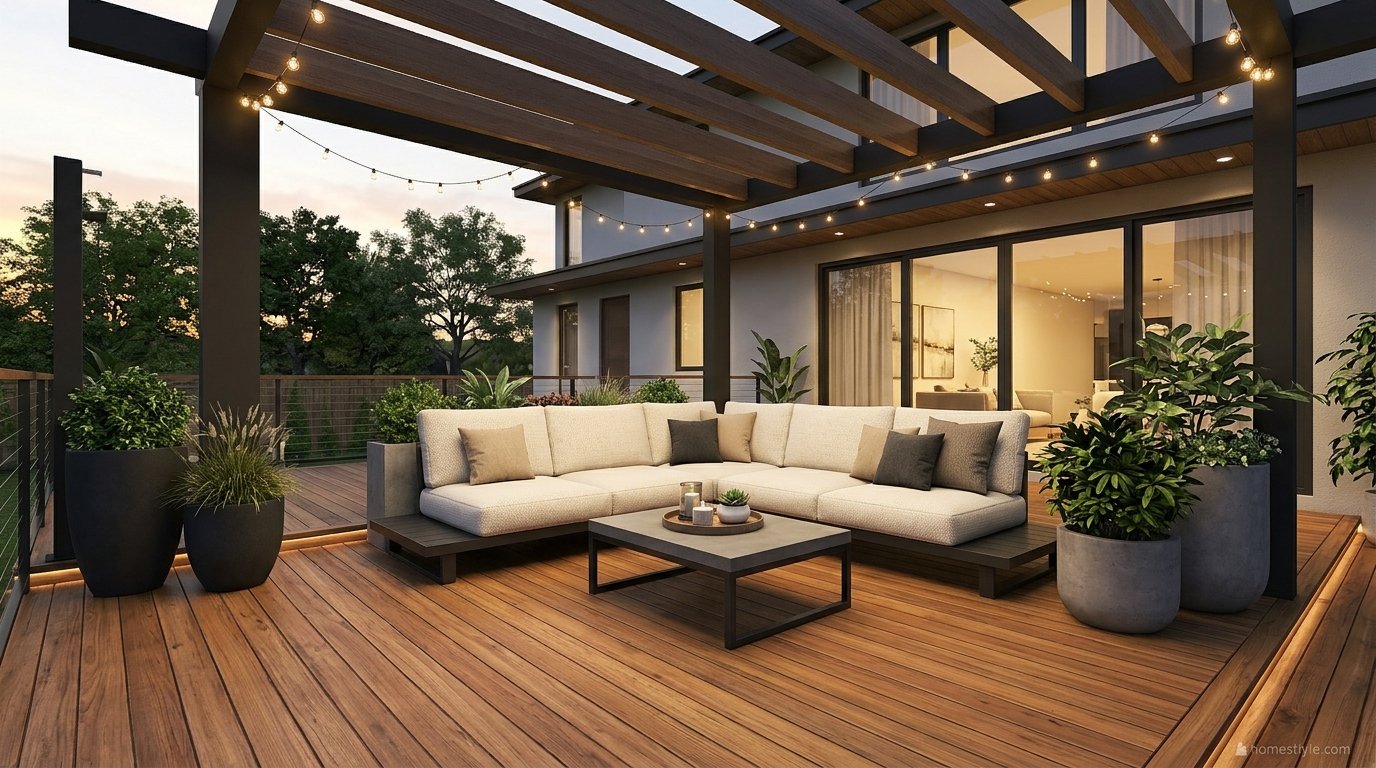
Teak tops most lifespan lists, at three different numbers. One materials guide gives 20 to 30 plus years, a pricing guide gives 25 to 50, and a grade focused guide gives Grade A teak 25 to 75.
|
Material |
Lifespan strands by source |
Maintenance it asks for |
Dining set price strand |
|---|---|---|---|
|
Teak |
20 to 30 plus years; 25 to 50; Grade A 25 to 75 |
Wash yearly; oil only if you want the honey color kept |
2,000 to 6,000 plus dollars |
|
Aluminum |
15 to 20 years; cast strands 15 to 25 |
Wash; touch up chips in powder coat |
500 to 3,000 dollars |
|
HDPE poly lumber |
15 to 25 years; 20 to 30 plus |
Soap and water; no sealing, no painting |
1,500 to 4,000 dollars |
|
Resin wicker |
5 to 15 years across three strands |
Hose down; cover or store in winter |
Mid range, below teak |
|
Acacia |
No lifespan figure sourced in this pass |
Oil regularly to hold color |
Entry level strand |
Aluminum is the coastal and small deck pick. It is light enough to move for cleaning or storms, shrugs off salt air, and shows up across the built in and bistro ideas in the This Old House deck customization guide.
HDPE is the low effort strand. It never needs sealing, survives being left out, and the brand example the guides name is POLYWOOD; its weight also keeps it planted on windy, raised decks.
Acacia is the budget wood with a condition. No lifespan figure was sourced for it in this pass, so treat it as the pretty, cheaper option that earns its keep only with regular oiling.
Lighting in Layers, Not Just String Lights
String lights alone are a ceiling with no walls. A finished deck layers three heights: overhead strings for glow, lanterns at table height for faces, and step or cap lights for safe feet.
Buy commercial grade strings, in warm white. That is the specification named by lighting pro Paul Gosselin in the This Old House deck design ideas: commercial grade M5 LED strings, not the disposable seasonal kind.
Strand lengths plan the layout. Strings come in 25, 48 and 100 foot strands, the 48 foot class commonly carrying 15 bulbs at about 3 foot spacing; measure the run before ordering, including the drop to the outlet.
The layered model has a name in the sources. Post cap, riser and under rail lighting are the three layers named in the Trex Martha Stewart deck decorating ideas, and together they light faces, treads and edges without glare.
Lanterns do the table work. Battery lanterns with faux candles give the warm pool of light that makes dinner look good, echoing the perimeter outlining trick used across the Real Simple deck ideas.
Hang lines high and never damage the wire. Eight to ten feet over walking areas keeps heads clear, and the safety note carried in the DecorCrowd deck decorating ideas is blunt: never staple or nail through a string light wire.
The Electrical Layer: GFCI, In-Use Covers, Outdoor Ratings
Plug in lights belong on a GFCI protected receptacle. NEC 210.8 requires ground fault protection on outdoor receptacles, the plain English version set out in the LED Lighting Info guide to GFCI and the NEC.
A deck needs its own receptacle by code. NEC 210.52(E)(1) requires a receptacle on each deck and balcony, which is why the extension cord across the lawn is a workaround, not a plan.
Covers must work while the cord is plugged in. NEC 406.9(B) calls for in use weatherproof covers outdoors, the bubble style covers that close over a live plug instead of propping open in the rain.
Know the limit of decor advice. New circuits, moved receptacles and hardwired runs are an electrician’s job in most jurisdictions; decor planning decides where light goes, not how the wiring gets there.
Shade Compared: Umbrella, Sail, Pergola, Awning
Shade decides whether the deck works at 2 p.m. Every option trades money, coverage and permanence differently, and the cost strands conflict by source, so they stay labelled in the table.
Sails cover the most area per dollar. The sail and pergola slides in the Spruce backyard deck ideas show why: one triangle of fabric shades a whole lounging zone, asking only for honest anchor points.
|
Shade option |
Cost strands |
Coverage |
Permanence |
Best job on a deck |
|---|---|---|---|---|
|
Market umbrella, 9 ft |
Entry level strand |
One table and its chairs |
Fully portable |
Small dining zones |
|
Cantilever umbrella, 10 to 11 ft |
Mid range strand |
Table plus chairs, offset pole |
Portable, heavy base |
Dining without a center pole |
|
Shade sail |
50 to 200 dollars per one guide; 300 to 2,000 installed per another |
Broad zone coverage; UV block strands 85 to 98 percent |
Semi permanent, seasonal |
Lounging zones on a budget |
|
Pergola |
Structure level cost |
Shade strands 30 to 50 percent coverage |
Permanent |
A room feel over lounging |
|
Retractable awning |
1,500 to 6,500 dollars across sources |
The strip along the house wall |
Permanent, retracts |
South and west facing decks |
|
Gazebo or hardtop canopy |
1,000 to 4,000 dollars across sources |
One defined zone |
Semi permanent |
A destination corner |
Privacy Compared: Cost, Permanence, Renter Score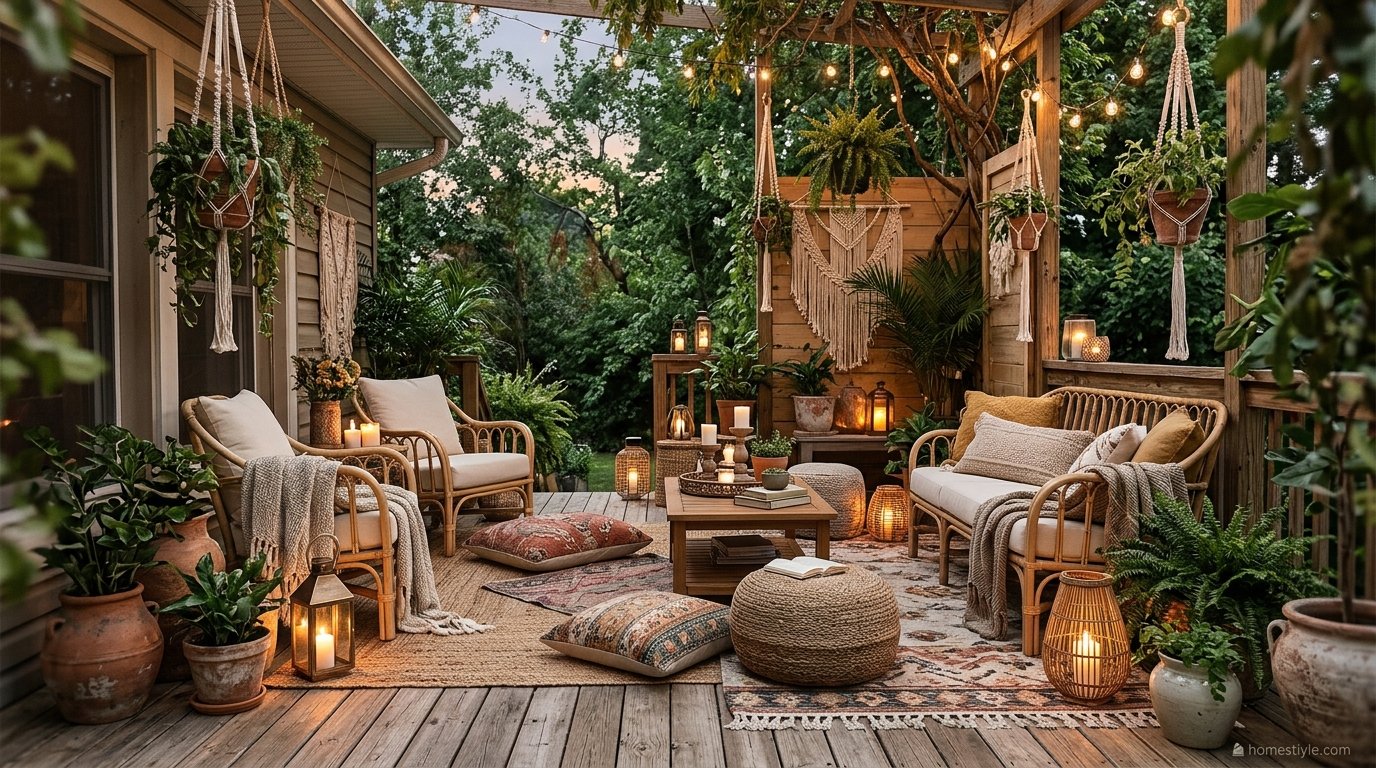
Privacy is a sightline problem, not a fence problem. One neighbor’s window, one hot tub, one exposed side: screen the exact line of sight and the whole deck feels private at a fraction of the cost.
Plants are the softest screen. Ornamental grasses, arborvitae in pots and vines on lattice all screen while looking like gardening, and the planter wall in the Spruce backyard deck ideas doubles the greenery as the barrier.
|
Privacy option |
Cost strands |
Time to full privacy |
Permanence |
Renter score |
|---|---|---|---|---|
|
Bamboo or willow roll |
30 to 80 dollars |
Instant, tied to railing |
Removable |
5 of 5 |
|
Lattice panel |
25 to 50 dollars per panel |
Instant |
Semi permanent |
4 of 5 |
|
Lattice plus vines |
Panel cost plus plants |
One to two growing seasons |
Semi permanent |
3 of 5 |
|
Outdoor curtains |
40 to 250 dollars |
Instant |
Removable |
5 of 5 |
|
Planter wall |
100 to 250 dollars |
Fast, at plant height |
Movable, casters help |
5 of 5 |
|
Louvered panel |
300 to 800 dollars |
Instant, adjustable |
Semi permanent |
2 of 5 |
The 6 foot line shows up in most local rules. Many municipalities treat 6 feet as the fence height reference, so taller screens can need a conversation with the local code office before they go up.
Targeted screening beats full fencing. One louvered panel placed where the overlooking window actually looks down does more than a ring of lattice, and it is the pattern the landscaper sources repeat.
Planters: Weight Math Before Beauty
Planters are where deck decorating turns structural. A big container of wet soil is heavy furniture that never gets weighed, and the one load warning in the top results appears in the Better Homes and Gardens deck decorating ideas without numbers attached.
Do the worksheet before the nursery run.
- Find the planter volume. Length by width by depth in feet gives cubic feet; a 4 by 2 by 1 foot box holds about 8 cubic feet of mix.
- Pick the saturated strand. Peat based potting mix at 45 to 55 lb per cubic foot, or wet garden soil at 75 to 100; use the strand that matches your mix.
- Multiply, then add the container. Eight cubic feet at the peat strand is 360 to 440 lb of soil alone, before the box, the water reservoir and the plant.
- Spread it against the benchmark. A typical residential deck is designed around 40 psf live load and about 50 psf total, so keep planters over joists and near edges, not clustered mid span.
Soil Weight Strands Against the 40 psf Deck
The soil strands conflict, and both are printed. A peat potting mix strand and a wet garden soil strand describe genuinely different materials, which is why the worksheet asks which mix you actually bought.
|
Mix |
Dry weight strand |
Saturated weight strand |
What 2 cubic feet weighs wet |
|---|---|---|---|
|
Peat based potting mix |
25 to 30 lb per cubic foot |
45 to 55 lb per cubic foot |
90 to 110 lb |
|
Lightweight deck mixes |
Not consistently published |
58 to 85 lb per cubic foot |
116 to 170 lb |
|
Wet garden soil |
Not the deck choice |
75 to 100 lb per cubic foot |
150 to 200 lb |
|
Deck design benchmark |
40 psf live load |
About 50 psf total design load |
Spread, never point loaded |
Drainage, Saucers and Surface Protection
Every pot needs a way out for water. Drainage holes, a saucer to catch the outflow, and a riser or pot feet so the base never sits in its own puddle against the boards.
Saucers protect boards and feed the mosquito rule. They stop the dark moisture ring under pots, and emptied regularly they never become the standing water that breeds mosquitoes in the lounging zone.
Railing planters and hanging baskets lighten the load path. They hang weight on the structure’s edge instead of the span, and the basket sizes in the galleries run 8 to 24 inches for a reason.
Green walls borrow indoor logic. The foliage first thinking in our moss green living room ideas and the layered planting in our forest green living room ideas translate directly to a deck living wall, with tougher species.
Fire on a Deck: Clearance Strands and the Strict Line
Fire is the focal point the galleries sell hardest and explain least. The leading decorating guide recommends a fire focal point with no clearances at all, so the strands below carry the whole safety layer.
Strand one: the 10 foot line. Guidance citing the NFPA puts a fire pit at least 10 feet from the house and 3 feet clear on all sides, the figures collected in the Fire Pit Surplus deck fire pit safety guide.
Strand two: the gas manual numbers. Gas fire feature manuals commonly print 3 to 5 feet of side clearance and 7 to 10 or more feet overhead, smaller numbers that still assume a listed appliance and a heat barrier.
Strand three: the strict line. Consumer Reports takes the hardest position of all: never put a fire pit on a wood or composite deck, full stop, and that line is printed here unsoftened.
Heat travels down as well as out. Composite softens near 176 degrees F while a pit base can transfer 200 to 400 degrees down, and fire pits themselves weigh 150 to 300 lb, so a brand approved heat shield mat is part of the purchase.
The Comfort Layer Nobody Writes: Mosquitoes, Fans, Storage, Power
Area repellents protect a zone, not a person. Thermacell style devices carry zone strands of about 15 feet in field testing and 20 feet for the rechargeable model strand, in calm air; wind shrinks every version of the claim.
Fans are the underrated weapon. Mosquitoes are weak fliers, and the comfort sources put the useful threshold at roughly 2 to 3 mph of airflow across the seating zone, which one well placed outdoor fan delivers.
Citronella is ambiance, honestly labelled. Its protective radius in the mosquito sources is tiny and calm air only, so burn the candles for the look and let the fan and the repellent do the work.
Power and water come before planters. Know where the receptacle, the hose bib and the sunny hours are before placing anything; drip lines and cord runs are invisible in photographs and decisive in real life.
Evening glamour is a lighting temperature. The warm metal against deep color pairing in our teal and gold living room ideas is the indoor version of the deck rule: warm light, deep tones, one gleaming accent.
Small Decks: Scale, Vertical Space, One Zone Done Well
A small deck is a one zone deck. Pick dining or lounging, do that zone completely, and let the other happen elsewhere; three half zones is the failure the small deck galleries are really warning about.
Scale is the whole game. The small deck method in the Better Homes and Gardens small deck ideas runs on multi use furniture, correct scale and vertical thinking, mirrors and sheer curtains included, and none of it needs a big footprint.
Go vertical with the greenery. Railing planters, hanging baskets and a narrow living wall give a small deck its garden without spending floor, the same move repeated across the Spruce small deck ideas.
Storage furniture earns its floor space twice. A bench that swallows cushions, a folding bistro set, and nesting side tables all appear in the refresh ideas in the Better Homes and Gardens deck upgrade ideas, and each one is a small deck survival tool.
Soft palettes widen tight spaces. The calm, layered approach in our champagne living room ideas and the pale neutrals in our sand living room ideas both run outdoors beautifully, with contrast carried by texture instead of dark color.
Budget Tiers With Dated Price Strands
The per idea cost attempt is rare enough to name. The cost and material framing in the Inaugural Homes deck decorating ideas at least tries to price each idea, and the makeover math in the YourHomeGlam budget backyard deck makeovers works the same under 100 dollar territory.
Tier one, under about 100 dollars in strand terms. String lights, cushion covers, a bamboo privacy roll at its 30 to 80 dollar strand and potted herbs change the feel of every zone for the price of one chair.
The top tier buys one anchor piece. One good seating group or a cantilever umbrella, chosen against the furniture strands, while the budget refresh pattern in the MaterialSix deck decorating ideas fills the gaps around it.
Renter Friendly Deck Decor
Renters get the full deck, minus the drill. Everything in this section hangs, ties, stands or rolls, and all of it leaves with you when the lease ends.
Weight still applies to renters. Balcony and rental decks carry the same load logic as owned ones, and the load warning in the Better Homes and Gardens deck decorating ideas names rooftop and balcony decks specifically, so the worksheet still runs first.
Earth tones photograph as calm. The grounded palette in our clay living room ideas and the botanical depth in our eucalyptus green living room ideas both suit the natural materials, wood, bamboo and woven textures, that renter friendly kits are built from.
Seasonal Turns: Summer Into Fall
Fall is a textile swap, not a rebuild. Warmer cushion covers, throw blankets that can live outside, and lanterns for the earlier darkness turn the same furniture toward October in one afternoon.
Planters turn with the season. Mums and ornamental grasses replace the summer annuals, and the accent color can swing warm, the way our coral living room ideas use a single warm hue to heat a whole room.
Frequently Asked Questions
1. How do I make my deck look nice?
Color first, then furniture, then the soft layer. One scheme, furniture sized to the deck, then rugs, lights and plants, everything outdoor rated.
That is the order the leading decorating guide states, and the sequence does the work.
2. How do I decorate a small deck?
One zone done well beats three done badly. Multi use furniture, vertical planters, correct scale and a simple palette carry a small footprint; the same publisher’s small deck page adds mirrors and sheer curtains for visual width.
3. What can I put on my deck for privacy?
Planter walls, screens, curtains, lattice and bamboo. The five working options differ sharply in cost, permanence and renter safety, which is exactly why the comparison table in this article scores them side by side before you buy.
4. What is the best rug size for a deck?
Size the rug to the zone, not the deck. Front legs of seating on the rug at minimum, and 24 to 36 inches of rug beyond a dining table on every side where chairs pull out.
5. How do I decorate a deck on a budget?
Refresh before you replace. Spray paint sound furniture, pot some herbs, hang string lights, swap cushion covers and define one zone with an affordable rug; that budget list changes how the deck feels for little money.
6. Can you put a rug on a wood deck?
Yes, with four conditions. Polypropylene or PET fiber, an open weave, no solid rubber or latex backing, and boards fully dry underneath, with the rug lifted after rain so moisture never stays trapped against the wood.
7. How do I add shade to my deck?
Match the shade to the zone. A tilting or 10 to 11 foot cantilever umbrella over dining, a sail for broad cheap coverage, a pergola for permanence, and an awning where the deck meets the house.
8. What outdoor furniture lasts the longest?
Teak and HDPE lead, but the years conflict. Teak strands run 20 to 30 plus, 25 to 50 and 25 to 75 years by source; aluminum sits at 15 to 20, and resin wicker at 5 to 15.
9. How do I arrange furniture on a deck?
Zone first, then place the pieces. Dining with pull out clearance, a lounging group on its rug, the grill near the kitchen door with clear space around it, and a walking path kept open through it all.
10. What are the best deck decor ideas for a backyard?
The recurring eight carry most decks. String lights, a defined dining area, cushy seating, a fire focal point, a rug, potted plants, one shade source and one privacy move; pages differ in sizes and rules, not ideas.
11. How do I make my deck cozy at night?
Layer the light at three heights. Strings overhead, lanterns at table height, and step or post cap lights for safety; warm white is the consensus tone, and commercial grade M5 LED is the named professional specification.
12. Can I put a fire pit on a wood deck?
Gas only, rated, shielded, at the manual’s clearances. Wood burning is the contested case, and the strictest strand says never on a wood or composite deck at all; read all three clearance strands before you buy.
13. Can I put a fire pit on a composite deck?
With more caution than wood. Composite softens near 176 degrees F while a pit base can send 200 to 400 degrees downward, so a brand approved heat shield and written brand guidance come before any flame.
14. How much weight can planters add to a deck?
Do the math per planter. Saturated soil strands run 45 to 55 lb per cubic foot for peat mixes and 75 to 100 for wet garden soil, set against a typical deck design of 40 psf live load.
15. What is the best material for an outdoor rug on a deck?
Polypropylene, by consensus. The leading guides agree it is hydrophobic, UV stable, mold resistant and hose cleanable; PET polyester is the accepted second, and natural fibers belong in covered, dry areas only.
16. Should furniture legs sit on the rug?
Front legs on, at minimum. Every seat in the group plants its front legs on the rug; all four legs is the generous version, and no legs at all makes the group look unanchored.
17. How big should a patio umbrella be for a deck?
Nine feet for market umbrellas, 10 to 11 for cantilevers. The canopy should shade the table and the chairs around it, extending past the table edge on the sun side at sitting hours.
18. Is a shade sail or an umbrella better for a deck?
A sail covers more per dollar; an umbrella adjusts. Sails need real anchor points and give angle dependent shade; umbrellas are portable and renter safe but shade a smaller circle and must close in wind.
19. How do I hang string lights on a deck without poles?
Anchor to what already exists. The house wall, pergola beams, trees, the railing, or screw in hooks on posts; never staple or nail through the wire, because damaged insulation on a live strand is a hazard.
20. Do outdoor string lights need a GFCI outlet?
Yes, for plug in lights. NEC 210.8 requires GFCI protection on outdoor receptacles, and NEC 406.9(B) requires an in use weatherproof cover anywhere a cord stays plugged in outdoors.
21. What lighting is best for deck steps?
Riser lights, or post caps that wash the treads. Steps are the trip hazard after dark, and the layered model of post cap, riser and under rail lighting is the system the sources name.
22. How do I keep mosquitoes off my deck?
Layer repellent, moving air and dry surfaces. Area repellent zone strands run 15 to 20 feet in calm air, fans defeat weak fliers above about 2 to 3 mph airflow, and saucers stay emptied.
23. Do citronella candles actually work on a deck?
Mostly ambiance, honestly. The mosquito sources give citronella a tiny, calm air only radius; treat the candles as decor and let a fan or an area repellent do the actual protective work.
24. How can renters decorate a deck without drilling?
Everything freestanding or tied on. Bamboo rolls on railings, tension wire curtains, planter walls on casters, freestanding screens and furniture that needs no fixing; the whole kit leaves with you, hole free.
25. What can I use instead of a fence for deck privacy?
Screen the sightline, not the boundary. One well placed louvered panel, a planter wall under the overlooking window, or curtains on the exposed side only; targeted screening costs less and looks deliberate.
26. How do I decorate a deck for fall?
Swap textiles, not furniture. Warmer cushion covers and throw blankets, lanterns for the earlier darkness, mums and ornamental grasses in the planters, and the fire feature moves to the center of the plan.
27. Can planters damage a deck?
Yes, by weight and by water. Saturated soil concentrates load on a small footprint, and pots in standing water hold moisture against boards; saucers, risers, drainage holes and light mixes answer both halves.
28. How do I protect my deck boards under a rug?
Start dry and keep it breathable. Open weave, no solid rubber backing, a draining pad or none at all, and lifts after heavy rain; discoloration and rot both trace back to water held against boards.
29. What size rug do I need under a dining table on a deck?
Add about 48 inches to the table. That is 24 inches of overhang per side, up to 36 for a generous pull out; four seats usually land on an 8×8 or 8×10, six on a 9×12.
30. How do I zone a deck for dining and lounging?
Dining near the kitchen, lounging at the view. Each zone gets its own rug or pool of light; the brand method states it plainly, zones where guests settle in, with a rug defining the seating group.
31. What is the best deck box for cushion storage?
Size the box to the cushion stack. Measure the pile it must swallow, then choose a box that doubles as a bench where seating runs short; storage seating is the space efficient form of the idea.
32. Can I use a grill on a deck safely?
On a mat, clear of rails and siding. The mat extends past the grill’s footprint and catches grease and embers; never run a grill under low eaves or a covered section unless the manual allows it.
33. What do I put under a grill on a wood deck?
A purpose made grill mat. It is rated for heat and grease and cut larger than the grill on all sides; the same heat barrier principle that protects boards under a fire feature applies here.
34. How do I decorate a raised deck?
Work the sightlines both ways. Privacy where neighbors look across or down, railing planters and post cap lights to soften the structure, and shade that tolerates the wind a raised deck catches.
35. How do I decorate a rooftop deck?
Weight first, then wind. Check the load bearing capacity before heavy containers, choose wood, resin or fiberglass planters with peat based mixes, and keep profiles low or anchored against gusts.
36. What plants grow best in pots on a sunny deck?
Bedding plants, herbs and ornamental grasses. That sunny set recurs across the guides, grown in potting mix rather than garden soil; on sun baked decks, pot size and watering rhythm matter more than species lists.
37. What plants work in shade on a deck?
Ferns and shade tolerant foliage. Vertical planters and living walls suit them, and hanging baskets move plants toward the brighter edges; match the plant to the light the deck gets at sitting hours, not noon.
38. How often should I lift an outdoor rug on a deck?
After heavy rain, and periodically through the season. The goal is boards that dry fully between wettings; a musty underside or darkened boards mean the interval between lifts ran too long.
39. Is teak or aluminum furniture better for a deck?
Teak lasts longest; aluminum travels lighter and costs less. Teak dining set strands run 2,000 to 6,000 plus dollars against aluminum at 500 to 3,000; HDPE and resin wicker fill the middle ground.
40. How do I make a deck feel like an outdoor living room?
Copy the indoor recipe. A rug as the floor, sofa scale seating, side tables, layered light and textiles on top; two leading publishers frame it exactly that way, indoor comforts carried outside.
41. What is the cheapest way to add privacy to a deck?
A bamboo roll tied to the railing. Privacy strands price bamboo or willow rolls at 30 to 80 dollars and basic lattice near 30 to 50 dollars per panel; both go up fast and stay renter safe.
42. How do I decorate a deck around a hot tub?
Privacy first, then wet foot safety. Screens around the tub, step lighting for the surround, a towel and robe station, planters kept clear of the access panel, and heater clearances respected.
Conclusion
Deck decor ideas stop being a shopping list the moment the zones are measured. Rug sized to the group, shade matched to the zone, weight checked before beauty, fire read as strands: that order turns photographs into a system.
Start with the tape measure, not the cart. Walkways, the dining footprint, the rug ladder and the 40 psf benchmark settle most decisions before a single product gets named.
Then spend where the strands agree. Polypropylene underfoot, layered light overhead, one privacy move aimed at the real sightline, and the comfort layers the galleries never mention.
The same discipline shapes the rooms indoors at the HomeStyle homepage. Zones first, honest numbers, and nothing merged that the sources keep apart; outdoors it simply has weather to answer to.
Measure your deck this weekend. Deck decor ideas become a finished outdoor room the moment the first rug lands at the right size and the first light goes up at the right height.
