
A good Reiki room does not need to be big or expensive. It needs to feel quiet, safe, and uncluttered the moment you step inside.
To create a calming Reiki room at home, choose a quiet space, soften it with natural textures, keep the design minimal, add meaningful wall art, use soothing colors, and refresh the decor with the seasons.
I have set up treatment spaces in spare bedrooms, small offices, and even a converted closet. The same lesson applies every time. Calm comes from fewer, better choices. The five ideas below will help you build a space for self-Reiki, a practitioner session, or simple meditation.
Textural Layers
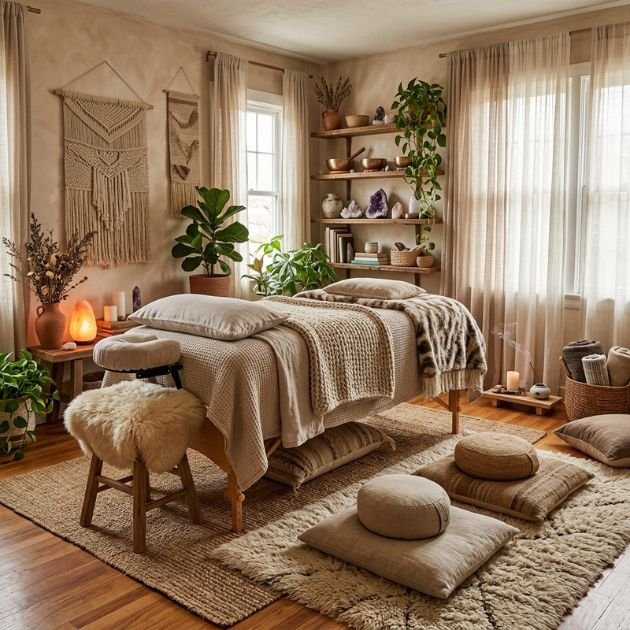
Texture is what makes a quiet room feel warm instead of empty. When everything is smooth and hard, a room can feel cold. Layers of soft, natural materials invite your body to relax.
Start with the floor, then add texture at hand height and at eye level. Stick to natural fibers like cotton, linen, wool, and jute. They breathe well, and they feel good against bare skin during a session.
Simple layering steps:
- Lay down a washable area rug to soften footsteps and absorb sound.
- Drape a linen or cotton throw over a chair or bench.
- Add two or three cushions in different but related fabrics.
- Finish with one natural element, such as a wooden bowl or a woven basket.
Keep the number of textures low. Three or four is plenty. More than that starts to look busy, and a busy room works against the calm you want.
Items that may come in handy:
- A thick, washable cotton or wool rug
- A wool or linen blanket for clients or yourself
- A bolster or knee pillow for treatment tables
- Woven baskets for storing towels and blankets
- A meditation cushion (zafu) with a removable cover
Minimalist Design
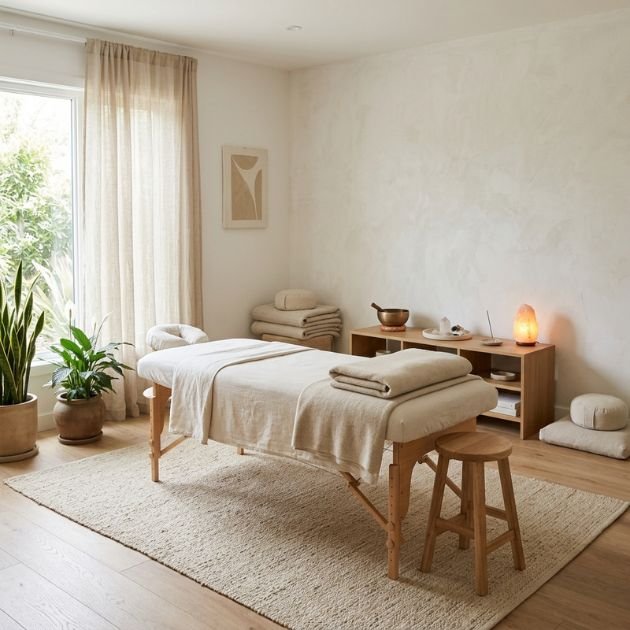
Minimalism is the backbone of a Reiki room. Clutter pulls attention outward, while open space lets it settle. You do not need to own less in general. You only need to keep this one room simple.
Begin by clearing the floor. A Reiki table or mat needs room on all sides, ideally about three feet, so you or a practitioner can move freely. Then remove anything that does not serve the room’s purpose, such as stacks of paper, exercise gear, or old storage boxes.
What a minimalist Reiki room usually includes:
- One main surface (table, mat, or chair)
- One small shelf or side table
- One light source you can dim
- One calming scent or sound source
Closed storage helps a lot. A simple cabinet or lidded basket hides towels, oils, and tools. When you can see fewer things, your mind has less to process.
You might like:
- A slim wooden side table with a single drawer
- Floating shelves for a few chosen objects
- A foldable or portable Reiki table that stores flat
- A small singing bowl on a low stand
- A plain, soft-glow lamp with a dimmer
Custom Wall Art
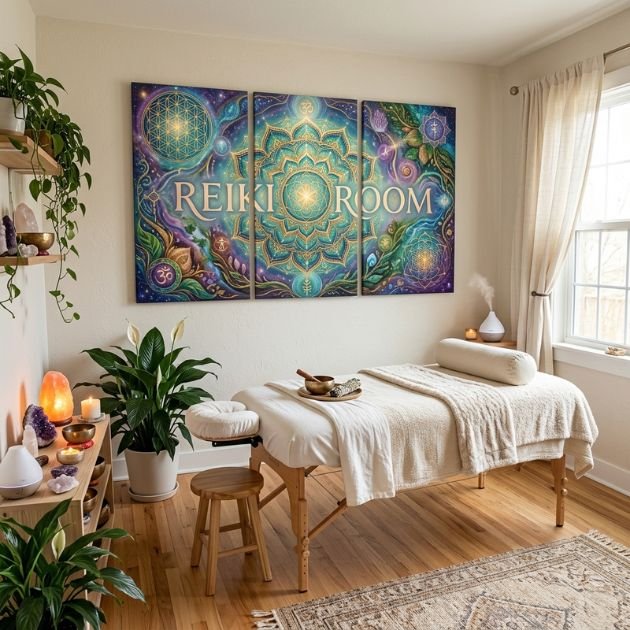
Walls are your chance to give the room a personality. The goal is not decoration for its own sake. It is to give the eye a quiet place to rest.
Custom pieces work well because they carry personal meaning. Think of a hand-painted watercolor, a framed line from a favorite mantra, a mandala, or a nature photograph you took yourself. A single large piece often feels calmer than a gallery of small ones.
Tips for choosing art:
- Pick soft, flowing shapes over sharp, busy patterns.
- Hang art at eye level when seated or lying down, which is lower than in most rooms.
- Choose images that make you breathe out when you look at them.
- Leave empty wall space around each piece.
Be careful with symbols. If you include sacred imagery, make sure you understand its origin and use it respectfully.
Possibly handy products:
- Custom watercolor or abstract canvas prints
- Wooden or bamboo frames with matte glass
- Fabric wall hangings or macramé
- Framed nature photography
- Picture rails or hooks that avoid wall damage
Creative Use of Color
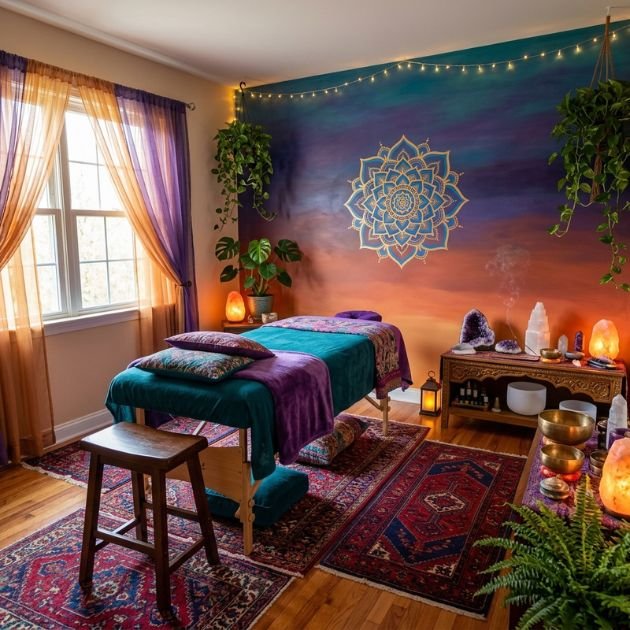
Color shapes mood quickly, often before you notice it. For a Reiki room, soft and low-contrast shades work best. These include warm whites, sage green, misty blue, sand, and pale lavender.
You do not have to repaint. A throw, a cushion cover, or a curtain can bring in color just as well. If you do paint, use a matte or eggshell finish. Glossy surfaces bounce light and can feel harsh in a quiet space.
A simple color formula:
- Base (60%): a calm neutral such as warm white or soft beige
- Support (30%): a gentle color such as sage or dusty blue
- Accent (10%): a small touch of earthy tone like terracotta or muted gold
Choose colors that match how you want to feel. Greens often feel grounding. Blues tend to feel cooling and open. Warm neutrals feel safe and enclosing. Trust your own response, since people differ.
Explore these options:
- Low-VOC matte paint in a calm neutral
- Sheer curtains in white or pale blue
- Natural dyed fabrics for cushions and throws
- Himalayan salt lamps for warm, amber light
- Colored glass bowls or vases in soft tones
Seasonal Decor Changes

A room you never change can start to feel stale. Small seasonal updates keep the space feeling alive without forcing a full redesign. They also give you a simple ritual to mark the year.
Keep your base the same, and swap only a few items. This protects the calm while adding variety.
Easy seasonal shifts:
- Spring: fresh flowers, lighter fabrics, open windows
- Summer: cool blue tones, linen, a small tabletop fountain
- Autumn: warm wool, amber light, dried grasses or leaves
- Winter: heavier blankets, soft candlelight, evergreen sprigs
Also adjust scent and light with the seasons. Citrus or mint suits warm months, while cedar or sandalwood suits cold ones. In winter, lean on warm lamps to make up for shorter days.
Some ideas to consider:
- A rotating cushion cover set (2 to 3 colors)
- Seasonal botanicals in a simple vase
- Beeswax or soy candles in a seasonal scent
- A lightweight throw for summer and a heavy one for winter
- A small altar tray you restyle each season
FAQ’s
What do you need in a Reiki room?
A quiet space, a comfortable table or mat, soft lighting, and minimal decor. Add calming scent or music if you like.
How big should a Reiki room be?
About 8 by 10 feet works well. This leaves room to walk around a treatment table.
What colors are best for a Reiki room?
Soft neutrals, sage green, pale blue, and sand. These tones feel calm and do not overstimulate.
Can I make a Reiki room in a small space?
Yes. A corner with a mat, a cushion, and soft lighting is enough. Use a screen or curtain to define it.
Do I need crystals or incense in a Reiki room?
No. They are personal choices, not requirements. Many people use them for focus and comfort.
How do I keep the space feeling peaceful?
Declutter weekly and keep the room for rest and healing only. Refresh scent, light, and textiles each season.
Final Thoughts
A calming Reiki room is built from simple choices that repeat the same message: slow down. Layer soft textures, keep the design minimal, hang art that means something to you, choose gentle colors, and update the decor with the seasons.
Start small. Pick one idea this week, such as clearing the floor or adding a dimmable lamp. Notice how the room feels afterward. Over time, the space will become a reliable signal to your body that it is safe to rest.
