
Walk through any well-tended garden and you will notice how many of the most striking plants share one thing in common: their names begin with the letter H. From the towering spires of hollyhock to the delicate, nodding bells of harebell, flowers that start with H cover an extraordinary range of shapes, colors, and growing needs.
Whether you are planning a pollinator border, searching for a shade-tolerant perennial, or just curious about flower names, this guide covers everything you need. You will find the full list of flower names, growing tips, fragrance notes, symbolic meanings, and practical advice on choosing the right H flower for your space.
Quick Answer: Flowers That Start With H
The most popular flowers that start with H include Hydrangea, Hibiscus, Hyacinth, Hellebore, Hollyhock, Heliotrope, Honeysuckle, Heather, Helenium, and Hosta. These ten names appear in most garden guides, seed catalogs, and flower identification lists. Beyond these familiar picks, there are more than 70 other flower names beginning with H, ranging from common cottage garden staples to rare botanical specimens.
76 Flower Names That Start With H
| Haemanthus (Blood Lily) | Hesperantha |
| Hamamelis (Witch Hazel) | Hibiscus |
| Hardenbergia | Himalayan Balsam |
| Harebell | Himalayan Knotweed |
| Hardy Geranium | Hoary Cinquefoil |
| Hawthorn | Hoary Mullein |
| Hawkweed | Hoary Willowherb |
| Heather | Hogweed |
| Hebe | Holm Oak Blossom |
| Hedychium (Ginger Lily) | Horned Pansy |
| Helenium (Sneezeweed) | Hornwort |
| Helianthus (Sunflower) | Hortensia (Hydrangea variety) |
| Heliconia | Hound’s Tongue |
| Helichrysum (Strawflower) | Houseleek Flower |
| Heliopsis | Humming Sage |
| Heliotrope | Hydrangea anomala (Climbing Hydrangea) |
| Hellebore (Christmas Rose / Lenten Rose) | Hyoscyamus (Henbane) |
| Hemerocallis (Daylily) | Hypoxis (Yellow Star Grass) |
| Hepatica | Hairy Violet |
| Herb Robert | Heartleaf Bergenia |
| Hesperis (Dame’s Rocket) | Heavenly Bamboo |
| Heuchera (Coral Bells) | Higo Iris |
| Himalayan Blue Poppy | Hot Poker (Kniphofia) |
| Hippeastrum (Amaryllis) | Hare’s Ear |
| Hollyhock | Hardhead (Knapweed) |
| Honesty (Lunaria) | Hairy Bitter Cress |
| Honeysuckle | Heal-all (Prunella) |
| Honeywort | Heath Flower |
| Hosta | Hedge Bindweed |
| Houstonia (Bluets) | Hedge Mustard |
| Hoya | Hedge Woundwort |
| Hummingbird Mint | Hemlock Water Dropwort |
| Hyacinth | Hemp Agrimony |
| Hyacinth Bean | Henbane |
| Hydrangea | Henbit Dead Nettle |
| Hypericum (St. John’s Wort) | Herb Bennet |
| Hymenocallis (Spider Lily) | Herb Paris |
| Hyssop |
How To Use This Guide
This guide works as both a quick-reference list and a practical gardening resource. Here is the best way to navigate it:
- Browse the full list above if you need a name for a flower you spotted or a word that begins with H.
- Read the individual flower profiles in the Common Flowers section for detailed growing tips.
- Jump to the Best H Flowers by Garden Need section to match a flower to your specific conditions.
- Check the FAQ section for quick answers to common questions about H flowers.
Gardeners, students, writers, and educators will all find useful information here, whether you are designing a border or working through an alphabetical flower project.
Flowers That Start With The Letter H: A Glance
| Flower Name | Color | Bloom Season | Light | Type |
| Hydrangea | Blue, Pink, White | Summer to Fall | Part Shade | Shrub |
| Hibiscus | Red, Pink, White | Summer | Full Sun | Shrub/Perennial |
| Hyacinth | Purple, Pink, White | Spring | Full Sun | Bulb |
| Hellebore | White, Purple, Pink | Winter to Spring | Shade | Perennial |
| Hollyhock | Pink, Red, Yellow | Summer | Full Sun | Biennial |
| Heliotrope | Purple, White | Summer | Full Sun | Annual/Tender Perennial |
| Honeysuckle | Yellow, White, Pink | Summer | Full Sun to Part Shade | Vine |
| Heather | Pink, Purple, White | Late Summer | Full Sun | Evergreen Shrub |
| Helenium | Yellow, Orange, Red | Late Summer | Full Sun | Perennial |
| Hosta | Lavender, White | Summer | Shade | Perennial |
Common Flowers That Start With H
Hydrangea
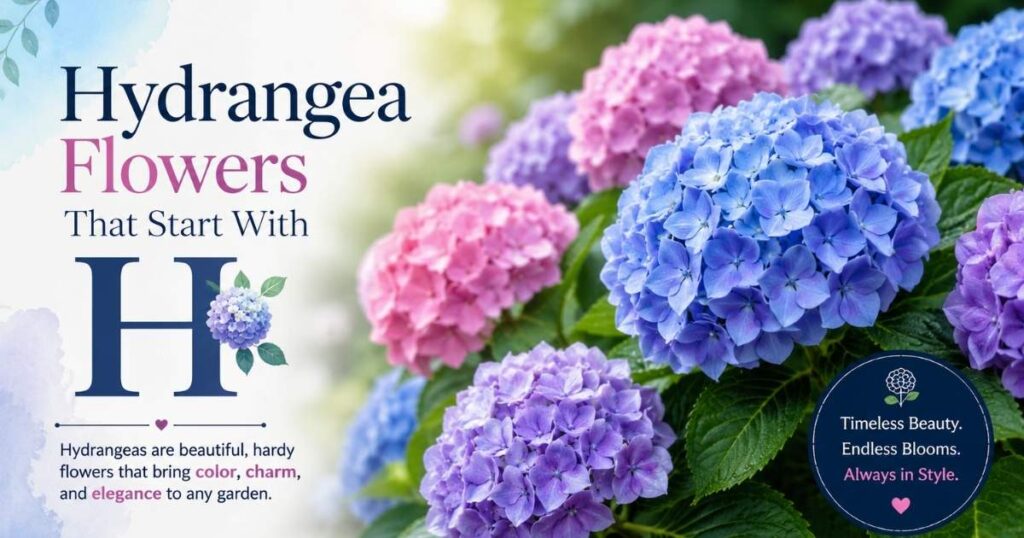
Hydrangea is one of the most beloved flowering shrubs in temperate gardens worldwide. Its large, globe-shaped flower clusters come in blue, pink, white, and lavender tones. One of its most fascinating qualities is that the bloom color on some varieties actually shifts depending on soil pH. Acidic soil pushes flowers toward blue, while alkaline soil produces pinker tones.
Key growing facts:
- Grows best in USDA zones 3 through 9, depending on variety
- Prefers partial shade with moist, well-drained soil
- Blooms from midsummer through early fall
- Over 75 species exist, with more than 600 named cultivars
Climbing hydrangea (Hydrangea anomala) is a less common but stunning vine version that clings to walls and fences. Panicle hydrangeas tolerate full sun better than most types, making them a good choice for sunnier spots.
Hibiscus
Hibiscus produces some of the largest, most dramatic blooms of any garden plant. The flowers are typically trumpet shaped with a prominent central stamen column, appearing in vivid shades of red, orange, pink, yellow, and white. Both annual and perennial types exist, with hardy hibiscus surviving winters in zones 5 through 9.
Hibiscus has cultural importance in many countries. It is the national flower of Malaysia and South Korea, and hibiscus tea is enjoyed across Asia, Africa, and Latin America. In the garden, it performs best in full sun with consistently moist soil.
Hyacinth
Few spring flowers match the hyacinth for fragrance. A single stem can fill a room with its sweet, rich scent, which is why it is so popular in cut flower arrangements and forced indoor displays. Dense spikes of star-shaped florets appear in spring in almost every color imaginable, from deep violet and cobalt blue to soft cream and coral pink.
Hyacinth bulbs are planted in autumn and bloom the following spring. They naturalize well in borders and look excellent in containers. One note for new gardeners: hyacinth bulbs can cause skin irritation in some people, so wearing gloves when handling them is a good idea.
Hellebore
Hellebore earns its spot as one of the most valuable winter-blooming perennials. Also called the Christmas rose or Lenten rose, it produces nodding, cup-shaped flowers in shades of white, cream, plum, dusty rose, and near-black from late winter through early spring, often pushing through snow. It thrives in shaded spots where many other plants struggle.
Important to note: all parts of hellebore are toxic if ingested, so plant it away from areas where children or pets frequently play.
Hollyhock
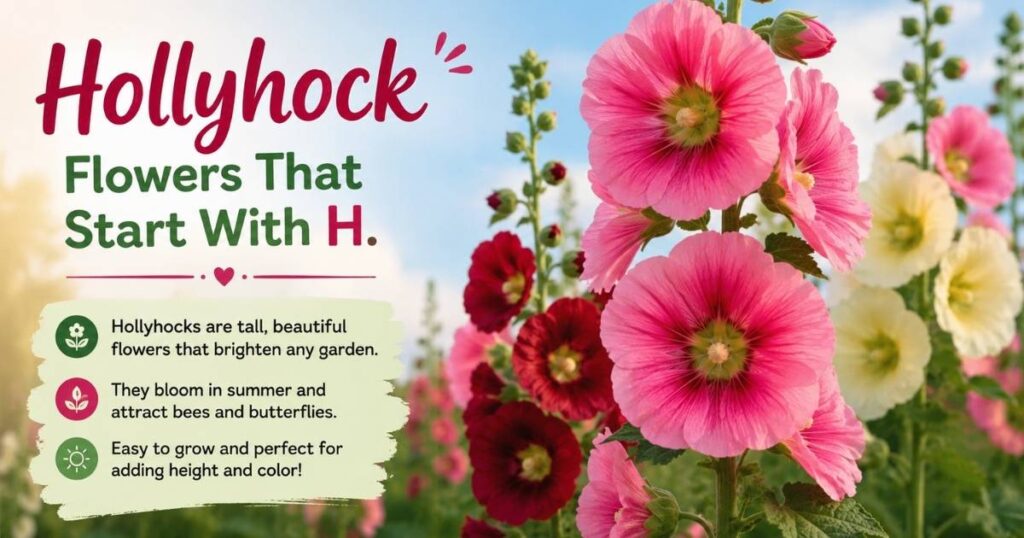
Hollyhock (Alcea rosea) is the quintessential cottage garden plant. Its tall spires can reach six feet or more, making it one of the most dramatic vertical elements available to gardeners. Colors range from soft pastels to deep burgundy and nearly black. Both single and double flower forms exist, with the doubles looking almost peony-like.
Hollyhock is technically a biennial or short-lived perennial, though it self-seeds readily, meaning once established it tends to return year after year without replanting.
Heliotrope
Heliotrope wins over gardeners with scent alone. Its small, purple flower clusters emit a warm vanilla and cherry pie fragrance that carries well on warm summer evenings. Native to Peru, it is tender in most climates and grown as an annual outside tropical zones. It works beautifully in containers near seating areas where the fragrance can be fully enjoyed.
Honeysuckle
Honeysuckle vines are recognized the world over for their tubular, sweetly scented flowers in yellow, white, and pink. They are vigorous climbers that wrap around trellises and fences quickly. Pollinators love them. Hummingbirds frequently visit the red and orange varieties. Japanese honeysuckle (Lonicera japonica) is fragrant but can be invasive in some regions, so native species like Lonicera sempervirens are often a better choice.
Heather
Heather is an evergreen shrub native to the moorlands of Europe and Asia Minor. In late summer and autumn, it carpets itself with tiny bell-shaped flowers in pink, white, and purple. Scottish landscapes are famous for heather-covered hillsides. In the garden, heather provides year-round structure and is a vital nectar source for bees. It grows best in acidic, well-drained soil.
Helenium
Helenium, commonly called sneezeweed, is a cheerful late-season perennial with daisy-like flowers in warm shades of yellow, orange, brick red, and mahogany. It blooms when many other perennials are winding down, giving gardens a warm, late-summer glow. The name “sneezeweed” does not reflect its effect on hay fever sufferers. It comes from a historical use of dried leaves in herbal snuff preparations.
Hosta
Hosta is primarily grown for its bold, lush foliage, but it does produce flowers, typically in midsummer. Pale lavender or white flower spikes rise gracefully above the leaves. Hostas are ideal for shaded areas where few other flowering plants will grow. They come in hundreds of varieties, from miniature types with leaves the size of a thumb to giant cultivars with leaves spanning two feet or more.
Heuchera
Heuchera, commonly known as coral bells, offers both attractive foliage and delicate flower stems. Its tiny bell-shaped blooms rise on wiry stems above colorful leaves that range from lime green to deep burgundy and burnt orange. It is a popular choice for part-shade borders and container planting, where its foliage adds color even when the plant is not in bloom.
Hesperis
Hesperis matronalis, also called dame’s rocket or sweet rocket, is an old-fashioned cottage garden plant with clusters of four-petaled flowers in purple, lilac, pink, and white. It releases a sweet fragrance in the evening hours, which makes it a good choice near patios or bedroom windows. Though classified as a biennial, it self-seeds so freely that it acts like a permanent resident in most gardens.
Harebell
Harebell (Campanula rotundifolia) is a native wildflower found across meadows, rocky grasslands, and open woodlands in the Northern Hemisphere. Its nodding, lavender-blue bell-shaped flowers appear on slender, wiry stems throughout summer. In Scotland, it is called the bluebell of Scotland. It is a delicate choice for naturalized plantings and meadow-style gardens where a light, airy look is the goal.
Houstonia
Houstonia, known by the common name bluets, is a small but charming wildflower native to North America. It produces tiny, four-petaled flowers in pale blue, lavender, or white with a yellow center. It grows low to the ground and blooms in early spring, often appearing in lawns, meadows, and woodland edges. Gardeners who enjoy native plant gardening often appreciate houstonia for its modest beauty and ecological value.
Haemanthus
Haemanthus, the blood lily or paintbrush lily, is a bulb-forming plant native to southern Africa. Its most distinctive feature is a dense, globe-shaped flower head packed with tiny individual blooms in red or white, surrounded by petal-like bracts. The red-flowered species (Haemanthus coccineus) is especially striking and blooms before its leaves appear. It is an unusual choice that adds real drama to containers and warm-climate gardens.
Hairy Toad Lily
The hairy toad lily (Tricyrtis hirta) is one of the more unusual late-season perennials available to gardeners. Its star-shaped flowers are white or pale lavender, heavily spotted with deep purple, giving them an orchid-like appearance. They bloom in late summer and autumn, providing color when many other perennials have finished. The plant prefers partial shade and consistently moist soil.
Hippeastrum
Hippeastrum is often sold and labeled as amaryllis, though technically the two are different genera. The large, trumpet-shaped flowers appear in deep red, white, salmon, striped, and bicolor forms. They are hugely popular as indoor winter-blooming bulbs and are among the easiest bulb flowers to bring into bloom indoors during the colder months.
Helichrysum
Helichrysum, commonly called strawflower or everlasting flower, produces papery blooms in yellow, orange, pink, red, and white. The petals hold their color and shape when dried, making them excellent for dried flower arrangements. The plant grows in full sun and tolerates poor, well-drained soil exceptionally well.
Hypericum
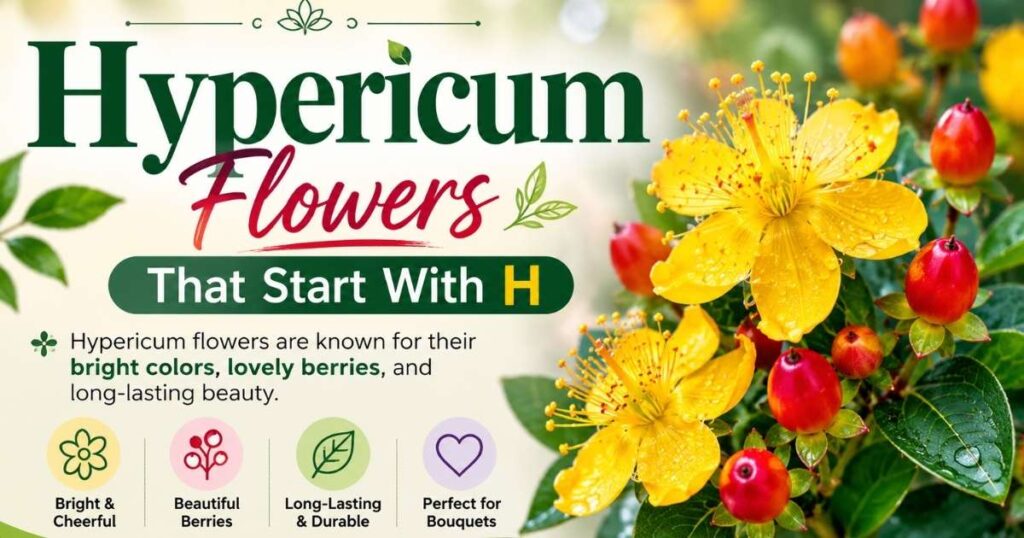
Hypericum, known widely as St. John’s Wort, produces bright yellow flowers with a prominent central cluster of stamens that give each bloom a cheerful, sunburst appearance. It grows as a low shrub and is followed by red, orange, or black berries. It is a tough, adaptable plant useful for groundcover in sunny spots with poor soil.
Honeywort
Honeywort (Cerinthe major) is an underused annual that deserves far more attention. Its blue-gray, waxy foliage and nodding, deep purple tubular flowers give it an almost sculptural quality. Bees are drawn to its nectar-rich blooms. It is easy to grow from seed directly in the ground and has a distinctly unusual look that makes it a conversation piece in any border.
Honesty
Honesty (Lunaria annua) is a biennial best known for its translucent, silver, moon-shaped seed pods, which are as decorative as its purple or white spring flowers. Both the flowers and the dried seed heads are valuable in arrangements. It self-seeds freely and will return each year once established, filling gaps in borders with minimal effort.
Hebe
Hebe is a genus of compact, evergreen shrubs native to New Zealand. They produce dense spikes of small flowers in white, pink, lavender, and purple, often over a long blooming period. Hebe is popular in coastal gardens because of its tolerance for wind and salt air. Smaller varieties work well in containers or at the front of borders.
Hawkweed
Hawkweed (Hieracium species) is a bright yellow wildflower that closely resembles a dandelion, though its flowers are smaller and carried in clusters. It thrives in meadows, rocky slopes, and areas with poor, well-drained soil. While some species can spread aggressively, native hawkweeds are important early-season nectar sources for insects.
Himalayan Blue Poppy
The Himalayan blue poppy (Meconopsis betonicifolia) is considered one of the most stunning and difficult flowers to grow in cultivation. Its clear, pure blue petals are almost impossibly vivid, unlike anything else achievable in most gardens. It demands cool summers, high humidity, and rich, acidic soil. Growing it successfully is a rewarding challenge for experienced gardeners.
More Flowers That Start With H
Familiar But Less Common Garden Flowers
Beyond the main profiles, several other H flowers appear regularly in gardens and catalogs:
- Hedychium (Ginger Lily): Tropical-looking perennial with fragrant, orchid-like flowers in white, yellow, and orange.
- Heliopsis: A sunflower-like perennial that blooms reliably in full sun with minimal care.
- Hepatica: A delicate early spring wildflower with jewel-like blooms in blue, white, and pink.
- Hemerocallis (Daylily): One of the most reliable and easy-to-grow perennials, with thousands of named cultivars.
- Herb Robert: A small, pink-flowered geranium relative that thrives in shady, rocky spots.
- Hardenbergia: A climbing plant with pea-like flowers in purple and pink, popular on trellises in mild climates.
- Hemp Agrimony: A native wildflower with fluffy, mauve-pink flower heads that butterflies love.
- Heal-all (Prunella): A low-growing perennial with purple flower spikes, historically used in herbal medicine.
- Hyssop: An aromatic herb with dense blue-purple flower spikes that attract bees and butterflies throughout summer.
- Hortensia: An old-fashioned name for mophead hydrangeas, still used in some European traditions.
Latin Flower Names That Start With H
Many well-known flowers carry Latin botanical names beginning with H. These are the official scientific names used in botany, horticulture, and seed catalogs:
| Latin Name | Common Name |
| Helianthus annuus | Common Sunflower |
| Helleborus niger | Christmas Rose |
| Helleborus orientalis | Lenten Rose |
| Heuchera sanguinea | Coral Bells |
| Hyacinthus orientalis | Dutch Hyacinth |
| Hypericum perforatum | St. John’s Wort |
| Hibiscus syriacus | Rose of Sharon |
| Hymenocallis festalis | Spider Lily |
| Hepatica nobilis | Common Hepatica |
| Hemerocallis fulva | Tawny Daylily |
Why Common Names and Latin Names Get Mixed Together
Common names and Latin names often overlap in flower lists because gardeners use both interchangeably. For example, most people call Heuchera “coral bells,” but many nursery labels use the Latin genus name. Similarly, Hippeastrum is universally sold under the name “amaryllis,” even though true Amaryllis is a different plant entirely. When buying plants, checking the Latin name ensures you get exactly the flower you want, especially within large genera like Hydrangea or Hibiscus where dozens of species exist with very different care needs.
Best H Flowers by Garden Need
Purple Flowers That Start With H
Purple is one of the most requested colors in garden planning. These H flowers deliver beautiful purple and violet tones:
- Hyacinth (spring bulb, rich violet to soft lavender)
- Heliotrope (deep purple clusters, vanilla scented)
- Hebe (purple spikes on evergreen shrubs)
- Hesperis (purple and lilac clusters, evening fragrant)
- Houstonia (pale lavender-blue native wildflower)
- Himalayan Blue Poppy (electric blue-purple, rare and dramatic)
- Heather (purple and mauve in late summer)
- Hairy Toad Lily (white with purple spotting)
- Hollyhock (available in deep purple and near-black)
- Hydrangea (blue-purple in acidic soil conditions)
Perennials That Start With H
Perennials return year after year, offering long-term value in any planting scheme. Reliable H perennials include:
- Hellebore
- Helenium
- Hosta
- Heuchera
- Hemerocallis (Daylily)
- Hypericum
- Heliopsis
- Hepatica
- Hairy Toad Lily
- Harebell
- Hummingbird Mint
- Hesperis (self-seeds to act like a perennial)
Annual and Annual-like Flowers
These H flowers complete their life cycle in one season or are grown as annuals in most climates:
- Helichrysum (Strawflower): Easy from seed, full sun, great for drying
- Honeywort: Cool-season annual, excellent for pollinators
- Honesty: Biennial, but self-seeds to behave like an annual
- Heliotrope: Tender perennial grown as annual in cooler zones
- Himalayan Balsam: Fast-growing annual for moist, shaded spots
- Hollyhock: Biennial that self-seeds reliably
Indoor and Container-Friendly H Flowers
These H flowers grow well in pots, containers, or as indoor plants:
- Hippeastrum (Amaryllis): Classic indoor winter bulb, spectacular blooms
- Hyacinth: Excellent in pots, forced easily indoors in winter
- Heuchera: Thrives in containers, attractive foliage year-round
- Hoya: Trailing or climbing indoor plant with waxy, star-shaped flowers
- Heliotrope: Ideal for large containers near seating areas
- Hebe: Compact varieties suit containers in sheltered spots
- Hydrangea: Potted mopheads are popular indoor and patio plants
Fragrant H Flowers Worth Growing
Scent is one of the most underrated qualities in a garden. These H flowers offer notable fragrance:
- Hyacinth: One of the most powerfully scented spring bulbs
- Heliotrope: Sweet vanilla and cherry pie fragrance in summer
- Honeysuckle: Classic sweet evening fragrance on climbing vines
- Hesperis: Light, sweet evening scent from spring to early summer
- Hedychium (Ginger Lily): Rich tropical fragrance in late summer
- Hyssop: Aromatic minty-herbal scent throughout the plant
- Hamamelis (Witch Hazel): Sweet winter fragrance from spidery blooms
Beginner Friendly H Flowers
New gardeners will find these H flowers easy to establish and maintain:
- Hydrangea: Tolerant of many conditions once established
- Hemerocallis (Daylily): Nearly indestructible, thrives almost anywhere
- Helenium: Plant, water, enjoy. Very low maintenance once settled
- Hosta: Shade-tolerant and tough, perfect for difficult spots
- Helichrysum: Sow seeds, water occasionally, harvest dried flowers
- Hyacinth: Plant bulbs in autumn, enjoy scented flowers in spring
- Hypericum: Tough groundcover that thrives in poor soil and full sun
H Flowers That Attract Pollinators
These H flowers are especially valuable for bees, butterflies, and other beneficial insects:
- Hyssop: A top nectar source for bees and butterflies
- Helenium: Attracts butterflies and bees in late summer
- Honeysuckle: Hummingbirds and bees love it equally
- Hollyhock: Bees, particularly large bumblebees, are regular visitors
- Heather: Vital for bees in late summer when other flowers decline
- Hemp Agrimony: An exceptional late-season butterfly flower
- Honeywort: Bumblebees are drawn to its tubular blooms constantly
- Hypericum: Open, accessible flowers perfect for short-tongued insects
Unusual And Rare Flowers That Start With H
For gardeners who want something genuinely different:
- Himalayan Blue Poppy: Genuinely rare pure-blue flowers, challenging but rewarding
- Haemanthus: African blood lily with unusual globe-shaped flower heads
- Hairy Toad Lily: Orchid-like spotted flowers in late autumn
- Hepatica: Tiny, jewel-bright wildflower that blooms before leaves appear
- Hymenocallis (Spider Lily): Elegant white blooms with spider-like petals
- Heliconia: Tropical lobster-claw blooms in vivid reds and oranges
- Hoya: Waxy, star-shaped flowers on a trailing indoor vine
What To Know Before You Plant H Flowers
Before selecting any flower from this list, there are a few things worth keeping in mind:
- Check your hardiness zone. Many H flowers, including hibiscus, heliotrope, and hedychium, are tropical or subtropical and will not survive frost outside their native zones without protection.
- Consider soil type. Heather and hypericum prefer acidic, well-drained soil. Hostas and hellebores need moisture-retentive, humus-rich soil. Matching the plant to the soil saves considerable effort.
- Think about toxicity. Hellebore, heliotrope, and hyacinth bulbs are toxic if ingested. Place them where children and pets cannot access them.
- Invasive species risk. Japanese honeysuckle (Lonicera japonica) and Himalayan balsam are considered invasive in parts of North America and the UK. Check local guidance before planting.
- Self-seeding behavior. Hollyhock, hesperis, and honesty self-seed generously. Leave them where they are welcome or deadhead promptly to control spread.
How To Choose the Right H Flower
Plants vs Flowers That Start With H
Not every H in this guide is purely a flower. Some, like hosta and heuchera, are primarily grown for their foliage. Others, like hebe and heather, are evergreen shrubs that happen to produce flowers. Understanding the difference helps you choose based on what you actually need: year-round foliage, seasonal bloom, or both.
Match The Flower To Light And Bloom Season
Use this simple approach to narrow your choices:
- Full sun garden: Heliotrope, helenium, helichrysum, helianthus, heather, hollyhock
- Part shade garden: Hellebore, hosta, heuchera, hepatica, hairy toad lily
- Deep shade: Hosta (most varieties), hellebore
- Spring bloom: Hyacinth, hellebore, harebell, hepatica
- Summer bloom: Hibiscus, honeysuckle, helenium, hollyhock, heliotrope
- Late season bloom: Helenium, heather, hairy toad lily, hypericum
Shrubs, Vines, Bulbs, and Perennials Play Different Roles
A shrub like hydrangea provides structure and volume. A vine like honeysuckle fills vertical space. A bulb like hyacinth delivers seasonal impact then disappears underground. A perennial like hellebore builds in place over years, forming larger clumps. Matching the growth habit to the role it needs to play in your garden saves time and money.
Which H Flowers Need More Care Before Planting
Some H flowers are more demanding than others. Himalayan blue poppy needs cool summers and high humidity. Haemanthus needs warm, frost-free conditions or indoor overwintering. Hippeastrum bulbs should be stored dry after blooming to trigger re-flowering. Hedychium needs a sheltered position in all but the mildest climates. For most gardeners, the easiest path is to start with well-proven options like hydrangea, hemerocallis, or helenium, and add more challenging plants as experience grows.
Flower Meanings and Symbolism
Flowers have carried symbolic meaning across cultures for centuries. Here is what several popular H flowers traditionally represent:
| Flower | Symbolic Meaning |
| Hydrangea | Gratitude, heartfelt emotion, abundance |
| Hyacinth | Sincerity, playfulness, jealousy (in some traditions) |
| Hibiscus | Beauty, delicate love, passion |
| Hellebore | Serenity, hope, protection |
| Hollyhock | Ambition, fertility, abundance |
| Heliotrope | Devotion, eternal love, adoration |
| Heather | Good luck, admiration, protection |
| Honeysuckle | Devoted affection, friendship, happiness |
| Harebell | Humility, gratitude, everlasting love |
| Haemanthus | Strength and courage |
In the Victorian language of flowers, known as floriography, giving someone a hyacinth expressed playful sincerity. A bouquet of heliotrope communicated unwavering devotion. Heather was traditionally tucked into buttonholes as a symbol of good fortune before important events.
FAQ’s
What are the most common flowers that start with H?
The most common flowers starting with H are hydrangea, hibiscus, hyacinth, hellebore, hollyhock, honeysuckle, heather, helenium, hosta, and heliotrope, all widely available at garden centers worldwide.
What purple flowers start with H?
Purple flowers that start with H include hyacinth, heliotrope, hebe, hesperis, lavender heather, houstonia, hollyhock (in deep purple varieties), and the Himalayan blue poppy, which appears a vivid blue-purple.
What are the best H flowers for beginners?
Hydrangea, daylily (hemerocallis), hosta, helenium, and helichrysum (strawflower) are the easiest H flowers for beginners, requiring minimal effort while still delivering strong seasonal color and interest.
Are any flowers that start with H fragrant?
Yes, several H flowers are notably fragrant, including hyacinth, heliotrope, honeysuckle, hesperis, hedychium, hyssop, and hamamelis (witch hazel), each with a distinct and recognizable scent.
What H flowers are good for pollinators?
Hyssop, helenium, honeysuckle, hollyhock, heather, hemp agrimony, honeywort, and hypericum are all excellent pollinator plants, providing nectar and pollen for bees, butterflies, and hummingbirds.
What is the rarest flower starting with H?
The Himalayan blue poppy (Meconopsis betonicifolia) is considered one of the rarest and most difficult H flowers to grow, prized for its extraordinary clear-blue petals, rarely seen in nature or cultivation.
Can H flowers grow in containers?
Yes. Hippeastrum (amaryllis), hyacinth, heuchera, hoya, heliotrope, hebe, and potted hydrangeas all grow well in containers, making them ideal for patios, balconies, and indoor spaces.
What does hydrangea symbolize?
Hydrangea symbolizes gratitude, heartfelt emotion, and abundance. In Japan, it is also associated with apology and sincere understanding.
Conclusion
Flowers that start with H cover one of the widest ranges of any letter in the alphabet. From the bold, tropical drama of hibiscus and the soil-pH magic of hydrangea to the quiet grace of harebell and the rarity of the Himalayan blue poppy, this letter delivers something for every gardener, every space, and every season.
Use the profiles and grouped lists in this guide to find the H flowers that fit your garden’s light, soil, and maintenance level. Whether you are filling a shaded corner with hostas and hellebores, planting a fragrant summer container with heliotrope and hyssop, or trying to grow the rare and stunning Himalayan blue poppy, the letter H will not disappoint.
Keep this guide as a reference, share it with fellow gardeners, and explore further with flowers from other letters in the alphabet to build a truly diverse and beautiful planting plan.
