
The letter L may be the thirteenth letter of the alphabet, but when it comes to flowers, it is one of the richest. From the calming scent of lavender fields in Provence to the sacred lotus floating in still Asian ponds, flowers that start with L bring together fragrance, color, symbolism, and garden versatility in one powerful group.
Most gardeners know lavender and lily. But how many know about Lechenaultia, Lycoris, or Lobster Claw? This guide covers all 55 flowers starting with L, organized by use, type, and growing condition. Whether you are planning a pollinator garden, choosing bouquet flowers, or just curious about botanical names, this is the most complete L flower reference you will find.
Quick Answer: What Are Flowers That Start With L?
Flowers that start with L include lavender, lily, lilac, lobelia, lotus, liatris, lantana, lisianthus, lupine, larkspur, lily of the valley, lobster claw, lunaria, lewisia, lycoris, lady’s slipper, lion’s tail, lungwort, lachenalia, and lace flower. The full list reaches 55 distinct flowers and flowering plants. They span perennials, annuals, shrubs, bulb flowers, aquatic bloomers, and tropical species.
Best L Flowers By Use
Before diving into the full list, here is a quick reference table so you can match the right flower to your specific need.
| Garden Use | Best L Flowers |
| Fragrance | Lavender, Lilac, Lily of the Valley, Lemon Verbena |
| Cut Flowers / Bouquets | Lisianthus, Lily, Larkspur, Lupine |
| Pollinators | Liatris, Lantana, Lobelia, Lupine |
| Containers | Lobelia, Lantana, Lewisia, Linaria |
| Water / Pond | Lotus, Lesser Celandine |
| Shade / Indoor | Lungwort, Lady’s Slipper Orchid |
| Rare / Collector | Lobster Claw, Lycoris, Lechenaultia, Lachenalia |
| Beginner Friendly | Lavender, Lantana, Liatris, Larkspur |
55 Flower Names With L
Below is the complete master list of 55 flowers that start with L, organized alphabetically with botanical name, color range, plant type, and primary use.
| Common Name | Botanical Name | Colors | Plant Type | Best Use |
| Lace Flower | Orlaya grandiflora | White | Annual | Bouquet filler |
| Lachenalia | Lachenalia spp. | Yellow, red, orange | Bulb | Container |
| Lady’s Slipper Orchid | Cypripedium spp. | Pink, yellow, white | Perennial | Shade garden |
| Lady’s Mantle | Alchemilla mollis | Chartreuse | Perennial | Border edging |
| Laburnum | Laburnum anagyroides | Yellow | Shrub/Tree | Ornamental |
| Lamb’s Ear | Stachys byzantina | Lavender-pink | Perennial | Foliage/texture |
| Lantana | Lantana camara | Multi-color | Perennial shrub | Pollinator, container |
| Larkspur | Consolida ajacis | Blue, pink, purple, white | Annual | Cut flower |
| Lavatera | Lavatera spp. | Pink, white | Annual/Perennial | Border |
| Lavender | Lavandula angustifolia | Purple, blue | Perennial | Fragrance, hedge |
| Lechenaultia | Lechenaultia spp. | Blue, red, yellow | Perennial | Rock garden |
| Lemon Verbena | Aloysia citrodora | White | Shrub | Herb, scent |
| Leopard’s Bane | Doronicum orientale | Yellow | Perennial | Spring border |
| Lesser Celandine | Ficaria verna | Yellow | Perennial | Woodland |
| Leucadendron | Leucadendron spp. | Yellow, red | Shrub | Ornamental |
| Lewisia | Lewisia cotyledon | Pink, orange, white | Perennial | Rock/container |
| Liatris | Liatris spicata | Purple, white | Perennial | Pollinator, border |
| Lilac | Syringa vulgaris | Purple, white, pink | Shrub | Fragrance, hedge |
| Lily | Lilium spp. | All colors | Bulb/Perennial | Bouquet, border |
| Lily of the Valley | Convallaria majalis | White, pink | Perennial | Groundcover, scent |
| Linaria | Linaria purpurea | Purple, pink, yellow | Annual/Perennial | Border, container |
| Lion’s Tail | Leonotis leonurus | Orange | Perennial shrub | Wildlife garden |
| Lisianthus | Eustoma grandiflorum | Purple, white, pink | Annual | Cut flower |
| Lobelia | Lobelia erinus | Blue, purple, red, white | Annual/Perennial | Container, border |
| Lobster Claw | Heliconia rostrata | Red, orange, yellow | Tropical perennial | Tropical garden |
| Lotus | Nelumbo nucifera | Pink, white | Aquatic perennial | Pond/water garden |
| Love-in-a-Mist | Nigella damascena | Blue, white, pink | Annual | Cottage garden |
| Lucerne | Medicago sativa | Purple | Perennial | Meadow, forage |
| Lungwort | Pulmonaria officinalis | Blue, pink, purple | Perennial | Shade, groundcover |
| Lunaria | Lunaria annua | Purple, white | Biennial | Cottage garden |
| Lupine | Lupinus spp. | Blue, purple, pink, white | Perennial/Annual | Meadow, border |
| Lycoris | Lycoris radiata | Red, pink, yellow | Bulb | Autumn border |
| Lychnis | Lychnis spp. | Red, pink, white | Perennial | Cottage garden |
| Large Speedwell | Veronica austriaca | Blue | Perennial | Ground cover |
| Large Fothergilla | Fothergilla major | White | Shrub | Woodland edge |
| Lenten Rose | Helleborus orientalis | Purple, white, pink | Perennial | Shade garden |
| Leopard Lily | Lilium pardalinum | Orange-red | Bulb/Perennial | Border, wildlife |
| Lesser Burdock | Arctium minus | Purple-pink | Biennial | Wild garden |
| Lewisia (Bitterroot) | Lewisia rediviva | Pink, white | Perennial | Alpine, rock |
| Lisianthus Prairie | Eustoma spp. | Mixed | Annual | Floral design |
| Lithodora | Lithodora diffusa | Brilliant blue | Perennial | Rock garden |
| Loosestrife (Purple) | Lythrum salicaria | Purple-pink | Perennial | Wetland, meadow |
| Loosestrife (Yellow) | Lysimachia vulgaris | Yellow | Perennial | Pond edge |
| Lopseed | Phryma leptostachya | Purple | Perennial | Woodland |
| Lord Anson’s Pea | Lathyrus nervosus | Blue-purple | Perennial vine | Cottage, fence |
| Love-Lies-Bleeding | Amaranthus caudatus | Deep red | Annual | Statement, border |
| Lungwort (Blue) | Pulmonaria longifolia | Blue | Perennial | Shade |
| Lacecap Hydrangea | Hydrangea macrophylla | Blue, pink, white | Shrub | Woodland border |
| Large-Flowered Trillium | Trillium grandiflorum | White | Perennial | Woodland |
| Lavender Cotton | Santolina chamaecyparissus | Yellow | Perennial shrub | Hedge, scent |
| Lace Hydrangea | Hydrangea anomala | White | Climbing shrub | Wall, trellis |
| Lady Tulip | Tulipa clusiana | Pink-white | Bulb | Spring border |
| Largeflower Bellwort | Uvularia grandiflora | Yellow | Perennial | Shade border |
| Laurustinus | Viburnum tinus | White-pink | Shrub | Winter interest |
| Leatherwood | Dirca palustris | Yellow | Shrub | Early spring |
Common Flowers That Start With L
Featured L Flowers With Quick Facts
The most recognized flowers starting with L share one quality: they all do something exceptionally well, whether that is fragrance, pollinator support, long vase life, or visual impact. Here is a closer look at the ten most notable ones.
Lavender
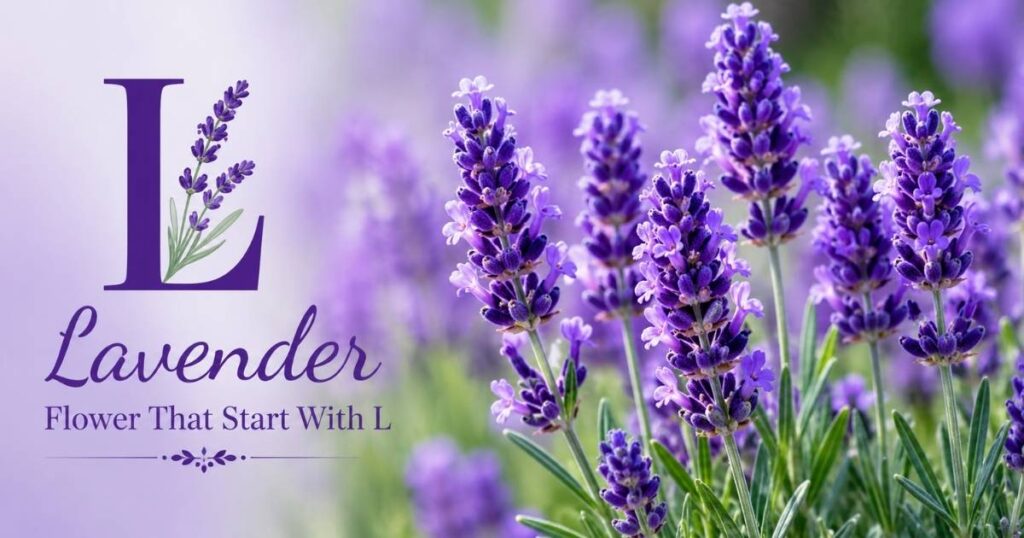
Botanical name: Lavandula angustifolia Type: Hardy perennial Blooms: June to August Zones: 5 to 9
Lavender is arguably the most globally recognized flower starting with L. Native to the Mediterranean region, it grows silvery-green foliage with tall purple spikes that carry a fragrance used in everything from aromatherapy to culinary recipes and skincare products.
Lavender thrives in full sun and well-drained, slightly alkaline soil. It is drought-tolerant once established, making it ideal for low-maintenance gardens. It also attracts bees and butterflies with consistent, reliable blooming throughout summer. French Lavender (Lavandula stoechas) offers a more decorative look with tufted petals, while English Lavender is hardier in colder climates.
Garden tip: Plant lavender along pathways or borders where brushing the leaves releases the natural fragrance.
Lily
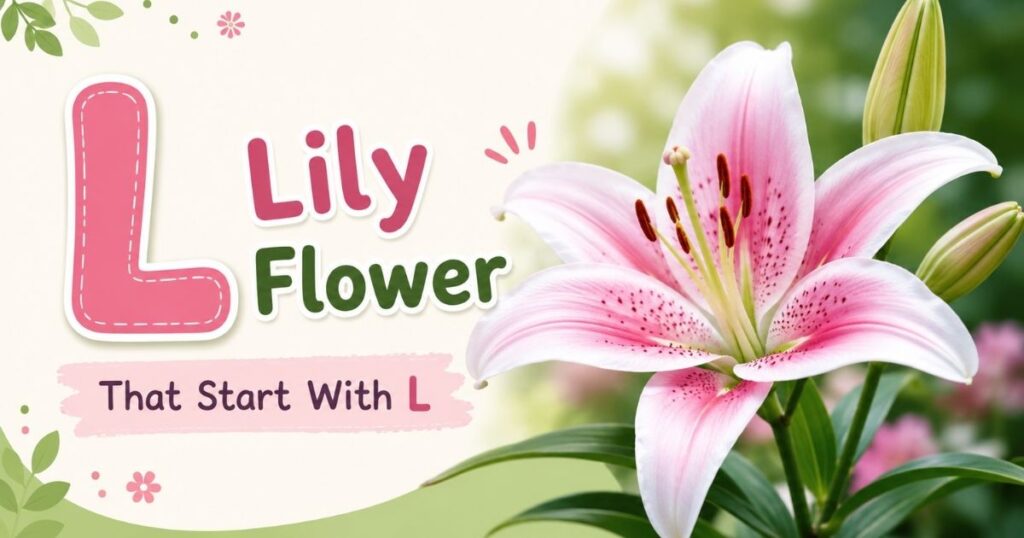
Botanical name: Lilium spp. Type: Bulb perennial Blooms: June to September Zones: 3 to 9
Lilies are among the most diverse flowering bulbs on the planet, available in almost every color. Asiatic lilies bloom earliest in summer and come in bold reds, oranges, and yellows. Oriental lilies bloom later and carry the strongest fragrance. Trumpet lilies grow tall with wide, outward-facing flowers.
Lilies prefer well-drained soil and full sun to partial shade. They symbolize purity, renewal, and grace across many world cultures. Tiger lilies are a strong wildlife attractor, while Calla lilies (technically Zantedeschia) are a florist staple. Plant bulbs at a depth of three times their diameter for best results.
Lilac
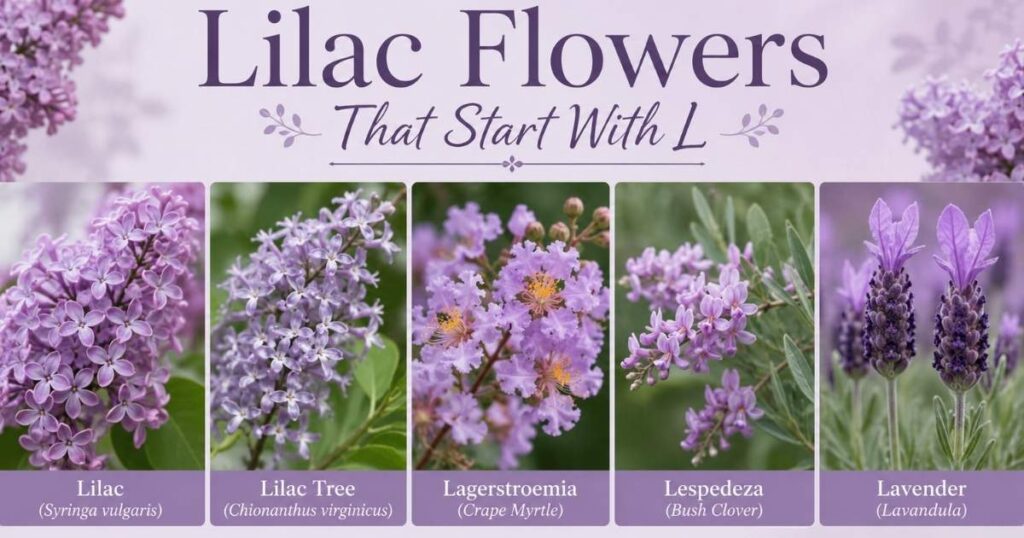
Botanical name: Syringa vulgaris Type: Deciduous shrub Blooms: April to May Zones: 3 to 7
Lilac is a flowering shrub loved worldwide for its dense clusters of tiny, intensely fragrant flowers in purple, lavender, pink, and white. Native to the Balkans, lilac has naturalized across Europe, North America, and parts of Asia. It is a classic cottage garden plant that also makes a beautiful informal hedge.
Lilac prefers cool winters and full sun, and it blooms reliably every spring once established. The scent of lilac is one of the strongest signals of spring. Common lilac and dwarf Korean lilac (Syringa meyeri) are both excellent choices depending on garden size.
Lobelia
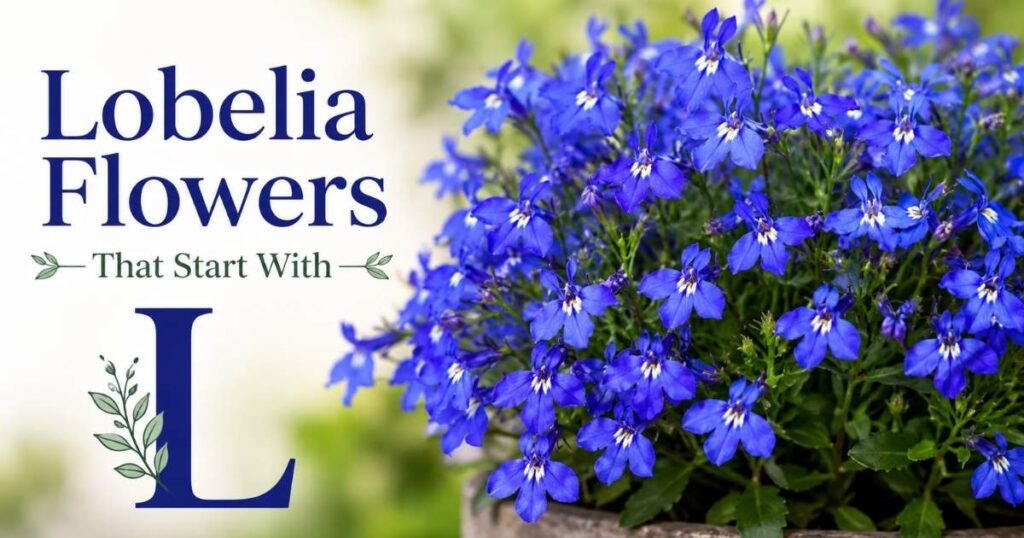
Botanical name: Lobelia erinus (annual), Lobelia cardinalis (perennial) Type: Annual or perennial Blooms: May to October Zones: 2 to 10
Lobelia is a versatile flowering plant that comes in trailing forms for hanging baskets and upright forms for garden borders. The bright blue, purple, and red varieties are among the most eye-catching small flowers in gardening. Cardinal flower (Lobelia cardinalis) is a tall red perennial that hummingbirds cannot resist.
Lobelia prefers consistently moist soil and partial shade in hot climates. It is one of the few true blue annuals that stays in bloom for months, making it a top pick for container gardening throughout summer.
Lotus
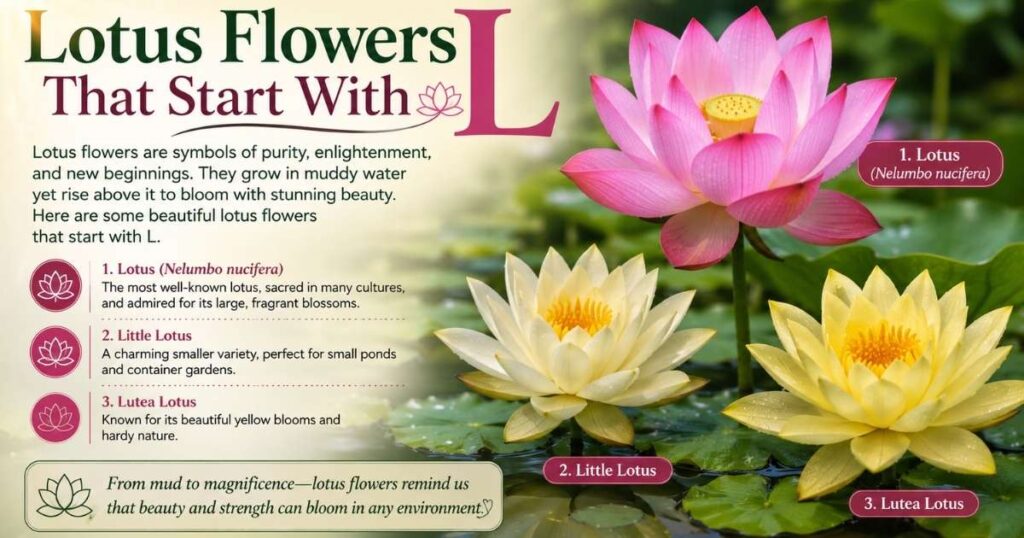
Botanical name: Nelumbo nucifera Type: Aquatic perennial Blooms: July to September Zones: 5 to 10
The sacred lotus is one of the most spiritually significant flowers on earth. Revered in Hinduism, Buddhism, and ancient Egyptian culture, it represents purity, spiritual awakening, and resilience. The lotus rises from muddy water to produce perfectly clean, stunning pink or white flowers above the surface.
Lotus grows in ponds and water gardens, requiring still or slow-moving water and full sun. It needs warm temperatures to thrive. The seeds are incredibly long-lived, with ancient lotus seeds successfully germinated after hundreds of years.
Liatris
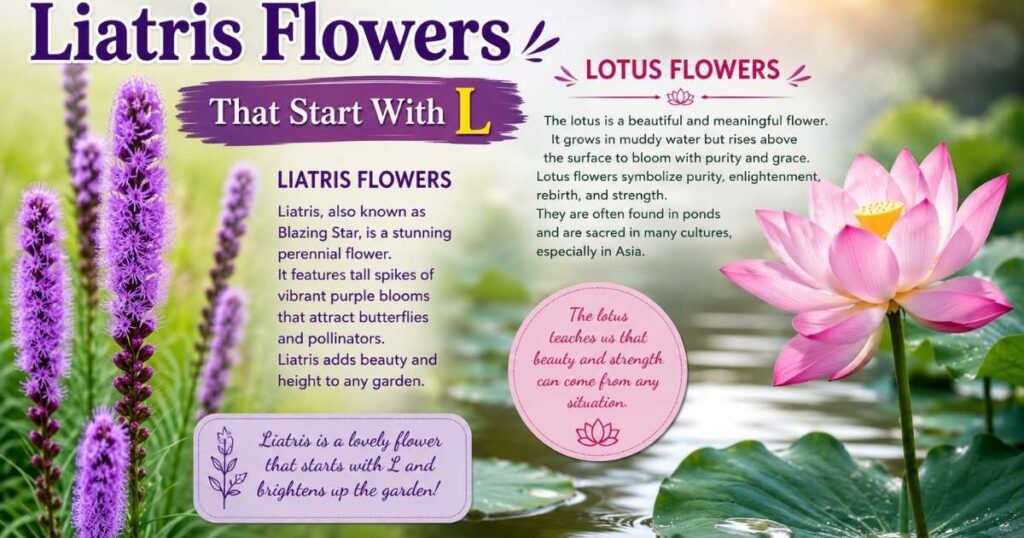
Botanical name: Liatris spicata Type: Native perennial Blooms: July to September Zones: 3 to 9
Also called blazing star or gayfeather, Liatris is a North American native that produces tall, feathery purple spikes. Unusually, liatris blooms from the top of the spike downward, unlike most spiked flowers that open bottom-up. It grows from corms and returns reliably every year.
Liatris is one of the best pollinator plants in the L category, drawing monarch butterflies, bees, and goldfinches. It thrives in full sun and tolerates poor, dry soil exceptionally well. It is also a long-lasting cut flower.
Lantana
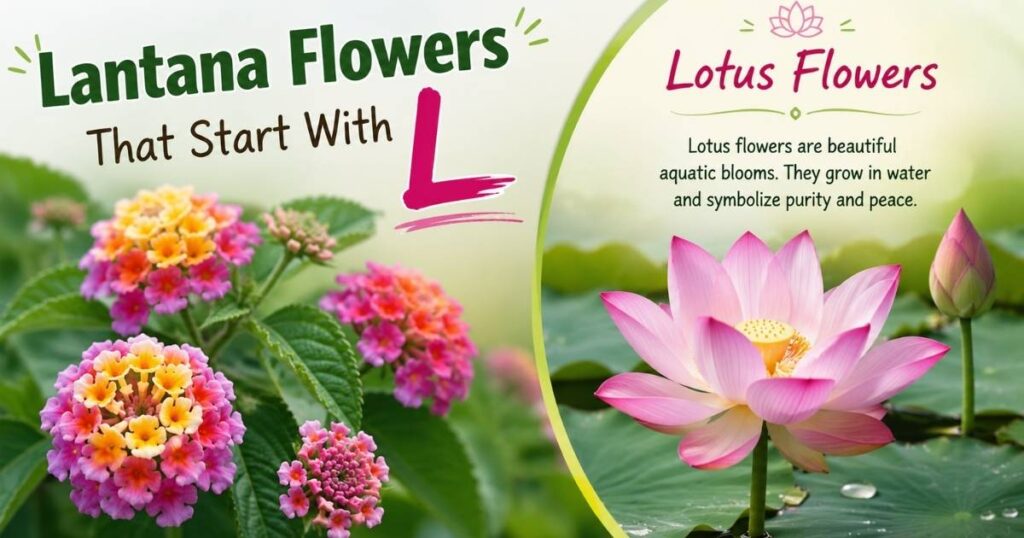
Botanical name: Lantana camara Type: Tropical perennial (grown as annual in cold zones) Blooms: Spring through frost Zones: 8 to 11
Lantana is a powerhouse bloomer with clusters of tiny flowers that often display multiple colors on a single flower head, shifting from yellow to orange to pink as they mature. It is native to tropical America and thrives in heat, full sun, and poor soil.
Hummingbirds and butterflies swarm lantana all season long. It is drought-resistant once established and works well in containers, borders, and hanging baskets. Note that lantana berries are toxic to pets and children.
Lisianthus
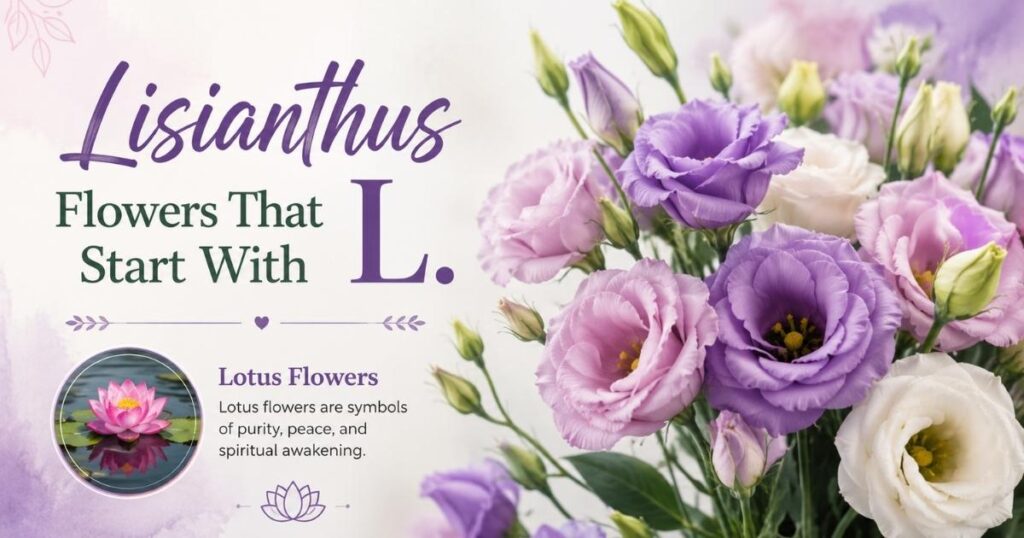
Botanical name: Eustoma grandiflorum Type: Annual Blooms: Summer to fall Zones: 8 to 10
Lisianthus is often called the rose of the prairie. Its ruffled, layered petals closely resemble roses or peonies, making it one of the most popular cut flowers in modern floristry. It comes in purple, white, pink, and bicolors.
Native to the American prairies, lisianthus has a long vase life of up to three weeks, which is why florists prize it so highly. It is moderately challenging to grow from seed but rewards patience with outstanding blooms. It prefers full sun and well-drained, slightly alkaline soil.
Lupine
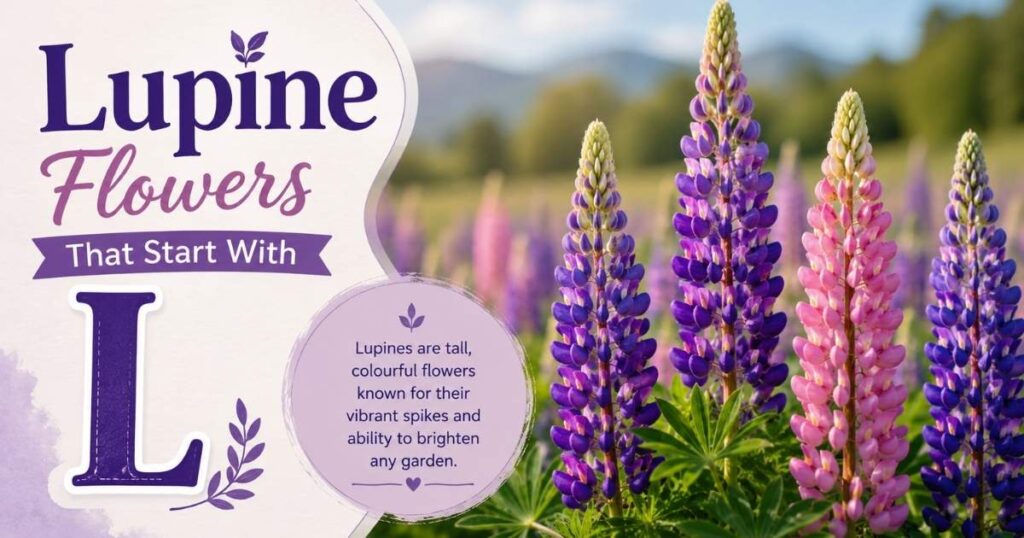
Botanical name: Lupinus spp. Type: Perennial or annual Blooms: May to July Zones: 4 to 8
Lupines are tall, dramatic flowers that grow in striking vertical spires packed with pea-like blooms in blue, purple, pink, white, yellow, and bicolors. They are nitrogen-fixing plants, meaning they actually improve soil health while growing. The Russell Lupine hybrid is the most commonly grown garden variety.
Lupines prefer cool summers, well-drained slightly acidic soil, and full sun to light shade. They naturalize beautifully in wildflower meadows and are a magnet for bumblebees. In coastal areas, wild lupines support the endangered Karner Blue butterfly.
Lobster Claw
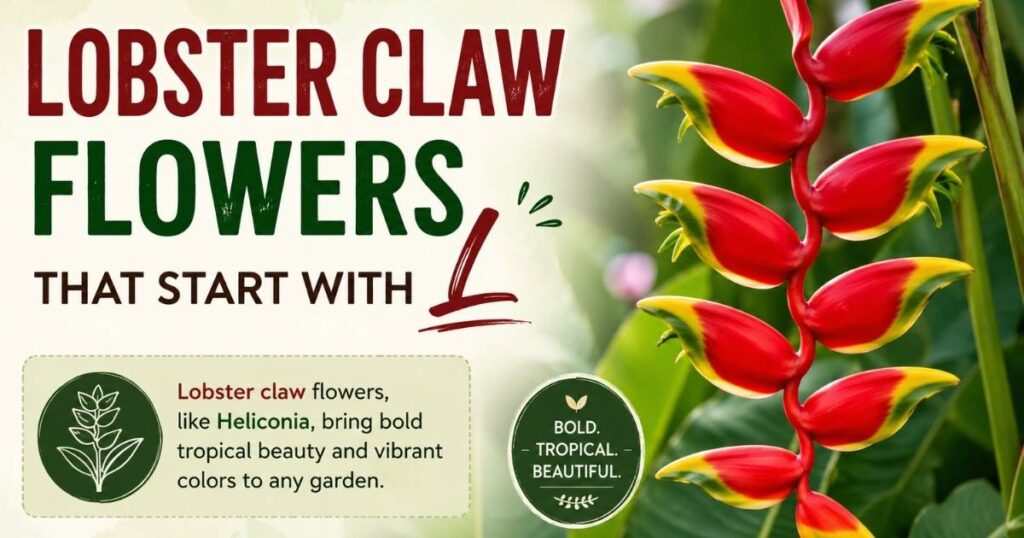
Botanical name: Heliconia rostrata Type: Tropical perennial Blooms: Year-round in tropics Zones: 10 to 12
The lobster claw heliconia is one of the most dramatic flowers on this entire list. Its pendulous, curved bracts in brilliant red, orange, and yellow truly do resemble the claw of a lobster. Native to South America, it is grown widely across tropical gardens in Hawaii, Florida, and Southeast Asia.
Lobster claw needs tropical heat, high humidity, rich moist soil, and partial to full shade. In cooler climates it works beautifully as a container plant moved indoors for winter. Hummingbirds are its primary natural pollinator.
Rare Flowers That Start With L
Beyond the popular varieties, several L flowers are lesser known yet genuinely worth seeking out for collectors and specialty gardeners.
- Lechenaultia (Lechenaultia spp.) – An Australian native producing vivid blue or red star-shaped flowers. Rarely seen outside of specialist nurseries.
- Lachenalia (Lachenalia spp.) – A South African bulb flower with tubular blooms in orange, yellow, and red. Excellent in pots.
- Lycoris (Lycoris radiata) – Known as spider lily or surprise lily, it sends up leafless stalks bearing spidery red flowers in late summer. Leaves appear separately in spring.
- Lady’s Slipper Orchid (Cypripedium spp.) – A protected wildflower in many countries, with a distinctive pouch-shaped petal. Difficult to cultivate and legally protected in the wild.
- Lithodora (Lithodora diffusa) – Produces some of the most intensely blue small flowers in gardening. Often overlooked but spectacular in rock gardens.
- Lion’s Tail (Leonotis leonurus) – A South African shrub with rings of bright orange tubular flowers along tall stems. Long blooming and highly attractive to birds.
- Lewisia (Lewisia cotyledon) – A compact alpine plant with jewel-bright flowers in layered star shapes. Native to the American West and perfect for rock gardens or troughs.
- Love-Lies-Bleeding (Amaranthus caudatus) – Features dramatic, rope-like drooping tassels of deep crimson flowers that are unlike almost any other garden plant.
How This 55 Flower List Was Curated
Inclusion Rules
A flower name was added to this list when it met at least one of the following standards:
- The common name begins with the letter L and the plant is widely recognized as a flower or flowering ornamental plant.
- The bloom is central to how the plant is identified and valued, even if the plant is technically a shrub, vine, or aquatic species.
- The flower appears in garden literature, floristry, or botanical reference sources with consistent documentation.
- Bulb flowers, flowering climbing plants, and flowering shrubs were included when the flower itself is the primary reason gardeners grow them.
What Was Not Counted As A Main Flower
Some L names appear in plant databases but were not included in this list for the following reasons:
- Foliage-first plants where the leaf is the main ornamental feature and the flower is minor or rarely visible.
- Ferns and mosses that happen to start with L.
- General tree names where the tree is not primarily grown for its flowers.
- Lichens and non-flowering plants.
- Cultivar sub-names that are not distinct flower species in their own right.
This keeps the list at a useful 55 rather than an inflated number that includes weak entries.
Symbolism And Cultural Recognition
Flowers that start with L carry remarkable symbolic weight across cultures and centuries.
| Flower | Cultural Symbolism |
| Lotus | Purity, spiritual enlightenment, rebirth (Buddhist, Hindu, Egyptian) |
| Lily | Purity, renewal, devotion (Christian, Greek, Chinese) |
| Lavender | Calm, devotion, serenity (European folk tradition) |
| Lilac | First love, youth, spring renewal (Victorian flower language) |
| Lupine | Imagination, admiration, happiness (North American tradition) |
| Lady’s Slipper | Capricious beauty, rare grace (Native American tradition) |
| Lisianthus | Appreciation, charisma, lasting bonds (modern floristry) |
| Larkspur | Lightness, positivity, open heart (cottage garden tradition) |
| Lantana | Rigour, resilience, adaptability |
| Lotus (White) | Mental clarity, spiritual perfection (Tibetan Buddhism) |
In the Victorian language of flowers, known as floriography, lilac meant the first emotions of love, while white lily represented purity and modesty. Lotus appears on Egyptian temple carvings dating back 3,000 years as a symbol of creation itself.
Plants Vs Flowers That Start With L
Not every plant whose name starts with L is primarily known as a flower. This distinction matters for gardeners, writers, and students who want to be accurate.
Common And Botanical Name
| Common Name | Botanical Name | Flower or Plant? |
| Lavender | Lavandula angustifolia | Flower (aromatic herb) |
| Lily | Lilium spp. | Flower (bulb) |
| Laurel | Laurus nobilis | Plant (foliage tree) |
| Lamb’s Ear | Stachys byzantina | Plant (foliage perennial, minor flower) |
| Lemon Balm | Melissa officinalis | Plant (herb with tiny flowers) |
| Linden Tree | Tilia spp. | Plant (tree, fragrant but minor flowers) |
| Lady Fern | Athyrium filix-femina | Plant (fern, no flower) |
| Lobelia | Lobelia erinus | Flower (true flowering annual) |
| Lisianthus | Eustoma grandiflorum | Flower (cut flower annual) |
| Lunaria | Lunaria annua | Flower (biennial, also known for seed pods) |
The key difference is whether the bloom is the primary reason the plant is grown and recognized. Laurel is grown for its aromatic leaves. Lavender is grown for its flowers and fragrance together. Lobelia is grown entirely for its bloom display.
Types Of Flowers That Start With L
Perennials That Start With L
Perennials return year after year, making them a long-term investment for any garden.
- Lavender (Lavandula angustifolia)
- Liatris (Liatris spicata)
- Lupine (Lupinus spp.)
- Lily (Lilium spp.)
- Lily of the Valley (Convallaria majalis)
- Lenten Rose (Helleborus orientalis)
- Lungwort (Pulmonaria officinalis)
- Leopard’s Bane (Doronicum orientale)
- Lady’s Slipper Orchid (Cypripedium spp.)
- Lycoris (Lycoris radiata)
- Lewisia (Lewisia cotyledon)
- Lion’s Tail (Leonotis leonurus)
Annual Flowers That Start With L
Annuals complete their full life cycle in one season and are replanted each year.
- Larkspur (Consolida ajacis)
- Lisianthus (Eustoma grandiflorum)
- Lobelia (Lobelia erinus)
- Love-in-a-Mist (Nigella damascena)
- Love-Lies-Bleeding (Amaranthus caudatus)
- Linaria (Linaria maroccana)
- Lavatera (Lavatera trimestris)
- Lace Flower (Orlaya grandiflora)
Purple Flowers That Start With L
Purple is the most common color among L flowers, and several of them are iconic in that color range.
- Lavender (soft purple-blue)
- Lilac (purple to deep violet)
- Liatris (vivid purple)
- Lobelia (blue-purple)
- Lupine (purple and blue)
- Linaria (purple)
- Lungwort (purple-blue mix)
- Loosestrife (deep purple-pink)
Fragrant L Flowers
If scent is a priority in your garden, these L flowers deliver the strongest fragrance.
- Lavender – One of the most recognizable scents in the world, described as floral, herbal, and calming.
- Lilac – Intensely sweet floral scent, strongest in the morning.
- Lily of the Valley – Delicate, sweet, and almost powdery fragrance. One of the most used scents in perfumery.
- Oriental Lily – Rich, heavy, tropical-style fragrance. Strong enough to scent an entire room.
- Lemon Verbena – Sharp, bright citrus fragrance from the leaves and tiny flowers.
- Lisianthus – Lightly sweet fragrance, more subtle than lily but persistent in arrangements.
Beginner Friendly Choices
New gardeners looking for easy-to-grow L flowers that are forgiving and reliable:
- Lavender – Plant once, enjoy for a decade. Needs sun and dry soil. Very low maintenance.
- Lantana – Almost impossible to kill in warm zones. Thrives on neglect and heat.
- Liatris – Plant corms in spring, forget about them, watch them bloom every summer.
- Larkspur – Direct sow seeds in early spring or fall. Grows without any special care.
- Lobelia – Available as ready-grown transplants everywhere. Blooms for months with little attention.
Indoor Or Protected Space Picks
These L flowers work well in indoor spaces, conservatories, or frost-free greenhouses.
- Lachenalia – Grows beautifully in cool conservatories during winter months.
- Lobster Claw – Thrives in a warm, bright indoor space with high humidity.
- Lisianthus – Can be grown indoors as a cut flower crop in a sunny room.
- Lady’s Slipper Orchid – Some species adapt to indoor growing in the right conditions.
Container And Small Space Picks
Perfect for pots, balconies, patios, window boxes, and small courtyard gardens.
- Lobelia (trailing varieties)
- Lantana (dwarf varieties)
- Linaria (compact and free-flowering)
- Lewisia (thrives in terracotta pots with gritty compost)
- Lachenalia (ideal bulb for containers)
- Lemon Verbena (grows happily in large pots)
Pollinator Friendly And Meadow Picks
These L flowers actively support bees, butterflies, hummingbirds, and beneficial insects.
- Liatris – Monarch butterfly magnet and a top native pollinator plant.
- Lupine – Feeds bumblebees and supports specialist bee species.
- Lantana – Continuous nectar source through the entire warm season.
- Lobelia cardinalis – Primary hummingbird plant in North American gardens.
- Lavender – Honey bees produce distinctive lavender honey from its nectar.
- Larkspur – Attracts bumblebees and long-tongued native bees.
Cut Flower And Bouquet Favorites
These L flowers have long vase lives, strong stems, and visual impact in arrangements.
| Flower | Vase Life | Best For |
| Lisianthus | Up to 3 weeks | Romantic arrangements |
| Lily | 7 to 14 days | Statement bouquets |
| Larkspur | 7 to 10 days | Tall, colorful filler |
| Lupine | 5 to 7 days | Vertical structure |
| Lavender | Dried indefinitely | Dried arrangements |
| Liatris | 10 to 14 days | Textured accent |
Water And Pond Flower Picks
For water features, bog gardens, or pond margins, these L flowers are excellent choices.
- Lotus (Nelumbo nucifera) – The premier aquatic flower. Grows in still water with full sun.
- Yellow Loosestrife (Lysimachia vulgaris) – Thrives at pond edges in moist to wet soil.
- Purple Loosestrife (Lythrum salicaria) – Produces tall pink-purple spikes. Note: considered invasive in some North American regions.
- Lesser Celandine (Ficaria verna) – Carpets moist, shaded stream banks with bright yellow flowers in early spring.
Quick Planning: Growing And Garden Planning
Bloom Season And Color Planning
To create an L flower garden that blooms from early spring to late autumn, plan across these seasonal windows:
| Season | L Flowers In Bloom |
| Early Spring | Lilac, Lenten Rose, Lesser Celandine, Lady’s Mantle |
| Late Spring | Lupine, Larkspur, Lily of the Valley, Leopard’s Bane |
| Early Summer | Lavender, Lily (Asiatic), Liatris, Linaria |
| Mid to Late Summer | Lily (Oriental), Lantana, Lobelia, Lotus, Lisianthus |
| Autumn | Lycoris, Lion’s Tail, Lantana, Liatris (late varieties) |
Light, Soil, And Zone Notes
| Flower | Sun Need | Soil | USDA Zones |
| Lavender | Full sun | Well-drained, alkaline | 5 to 9 |
| Lily | Full to partial sun | Well-drained, fertile | 3 to 9 |
| Lilac | Full sun | Moist, well-drained | 3 to 7 |
| Liatris | Full sun | Any, dry tolerant | 3 to 9 |
| Lupine | Full to partial sun | Slightly acidic, well-drained | 4 to 8 |
| Lotus | Full sun | Aquatic/loam | 5 to 10 |
| Lobelia | Partial shade | Moist, rich | 2 to 10 |
| Lisianthus | Full sun | Well-drained, neutral to alkaline | 8 to 10 |
| Lungwort | Full shade | Moist, humus-rich | 3 to 8 |
| Lantana | Full sun | Well-drained, dry tolerant | 8 to 11 |
Pollinator, Pet, And Safety Points
Several L flowers carry important safety notes for households with pets or children.
- Lily of the Valley – All parts are highly toxic to humans, dogs, and cats. Keep away from children and pets.
- Lantana berries – Toxic to dogs, cats, and children. The flower itself is not toxic, but ripe berries are.
- Lycoris (Spider Lily) – All parts are toxic if ingested. Wear gloves when handling bulbs.
- Larkspur – All parts are toxic, especially seeds. Toxic to livestock and humans.
- Lily (Lilium spp.) – Highly toxic to cats. Even small amounts of pollen can cause kidney failure in felines.
- Lavender – Generally safe for humans but mildly toxic to dogs and cats in large amounts.
- Liatris, Lupine, Lobelia – Mild toxicity. Avoid ingestion. Safe for handling.
- Lotus – Non-toxic. Leaves and seeds are edible and used in Asian cooking.
FAQ’s
What is the most popular flower that starts with L?
Lavender is the most globally recognized L flower, followed closely by lily and lilac.
Are there blue flowers that start with L?
Yes. Lobelia, Lithodora, Lechenaultia, Lungwort, and Linaria all produce vivid blue flowers.
What flowers that start with L are good for bees?
Lavender, Liatris, Lupine, and Lantana are the top four bee-friendly L flowers.
Is lily of the valley poisonous?
Yes, all parts of lily of the valley are toxic to humans, dogs, and cats and should be handled with care.
What L flowers bloom in spring?
Lilac, Lupine, Larkspur, Lily of the Valley, Lenten Rose, and Leopard’s Bane all bloom in spring.
Can lotus grow in a container?
Yes. Dwarf lotus varieties grow successfully in large containers or half whiskey barrels with at least 12 inches of water depth.
What is the rarest flower starting with L?
Lady’s Slipper Orchid is one of the rarest, protected by law in many countries due to habitat loss and slow reproduction.
What L flower has the longest vase life?
Lisianthus holds up to three weeks in a vase, making it one of the longest-lasting cut flowers in this group.
Is lavender annual or perennial?
Lavender is a perennial in USDA zones 5 to 9, returning reliably each year with proper pruning.
What flowers starting with L are toxic to cats?
True lilies (Lilium spp.) are extremely toxic to cats. Lily of the Valley and Lycoris are also toxic to felines.
Conclusion
Flowers that start with L represent one of the most diverse and rewarding groups in all of gardening. From the world-famous scent of lavender to the sacred beauty of the lotus, from the designer elegance of lisianthus to the rare drama of lobster claw, this letter covers fragrant herbs, pollinator-friendly meadow plants, prized cut flowers, and water garden centerpieces all at once.
The 55 flowers in this guide were chosen because each one earns its place by delivering genuine ornamental, cultural, or ecological value. Whether you are a seasoned gardener planning next season’s borders, a florist sourcing inspiration, a student building vocabulary, or simply someone who loves beautiful blooms, you now have one complete, structured reference for every important L flower.
Start with lavender if you want low maintenance and fragrance. Choose lisianthus if bouquets are the goal. Plant liatris if pollinators are the priority. And if you want something truly rare, track down a Lady’s Slipper Orchid or a Lobster Claw heliconia. The variety that flowers starting with L offer is genuinely unmatched in the alphabet.
