
When you walk into a beautifully renovated bathroom, your eyes naturally travel from the floor upward. That small strip of tile running along the base of your walls plays a much bigger role than most people realize. Tile baseboards protect your walls from water damage, moisture, and everyday wear while tying your entire design together. Whether you are planning a full renovation or a quick refresh, choosing the right tile baseboard can completely transform the look and feel of your bathroom.
From classic subway tiles to bold geometric patterns, there are styles to suit every taste and budget. This guide walks you through 16 creative tile baseboard ideas, complete with product suggestions and practical tips to help you make the best choice for your space.
Eclectic Mix for Playfulness
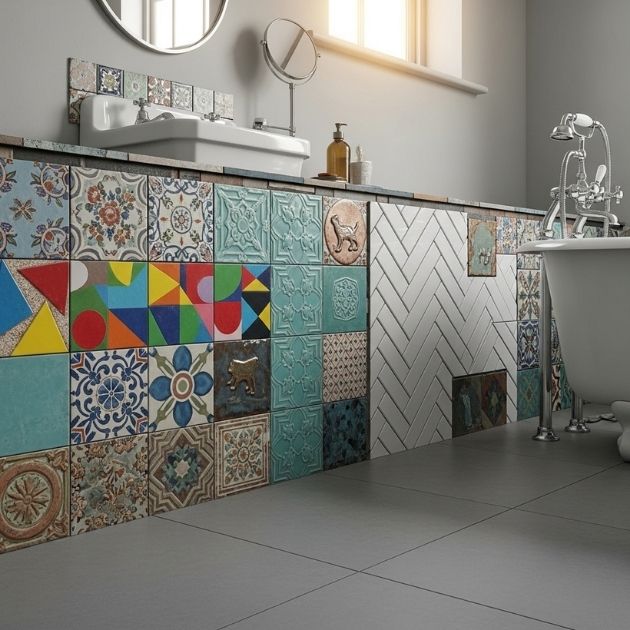
Who says your baseboard has to be one single tile? Mixing patterns, colors, and textures in your baseboard creates a lively, artistic look that gives your bathroom genuine personality. An eclectic approach works best when you keep a consistent color palette to prevent the space from feeling chaotic.
Think about pairing a bold patterned floor tile with a contrasting baseboard in a complementary hue. You could also pull two or three accent tiles from your main wall design and alternate them along the baseboard strip for a cohesive yet playful effect.
Explore these options:
- Decorative ceramic mix-and-match tile sets
- Hand-painted accent border tiles
- Multicolor grout pens to enhance tile transitions
Seamless Integration
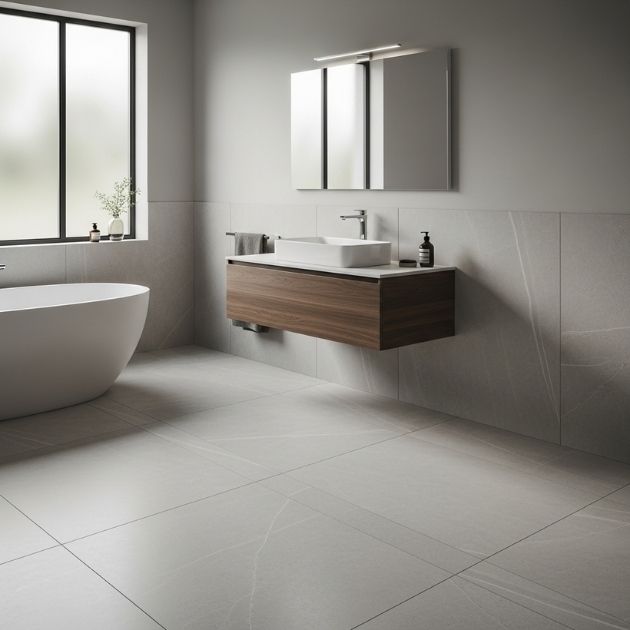
A seamless baseboard blends effortlessly with your wall tiles and floor tiles, creating an uninterrupted flow throughout the room. This approach is popular in contemporary and minimalist bathroom designs where clean lines are the priority. Matching your baseboard tile to your floor or wall finish, whether in the same color family or the exact same tile, eliminates visual breaks and makes the bathroom feel more spacious.
This technique works particularly well in small bathrooms because the lack of contrasting trim lines gives the illusion of a larger room.
Might be a good match:
- Large-format porcelain tiles in matte finish
- Rectified edge tiles for tight grout lines
- Matching bullnose tile trim pieces
Textured Tiles for Visual Interest
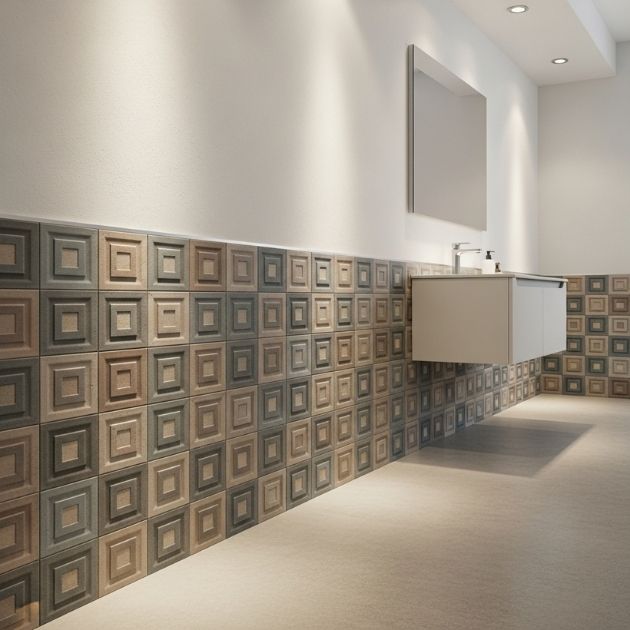
Smooth, flat surfaces have their place, but textured tiles add a tactile depth that turns an ordinary baseboard into a standout design feature. Raised relief tiles, 3D surface tiles, and stone-effect finishes catch the light differently throughout the day, giving your bathroom a dynamic quality that flat tiles simply cannot replicate.
Textured baseboards pair especially well with smooth, simple wall tiles because the contrast between the two surfaces adds visual dimension without clutter.
You might give these a try:
- 3D wave pattern ceramic tiles
- Lava stone effect baseboard tiles
- Ribbed or fluted porcelain strips
Natural Stone Elegance
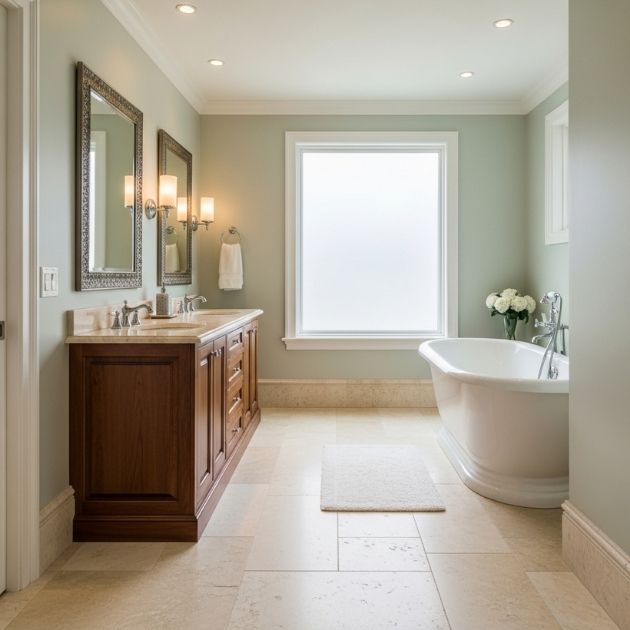
There is a reason natural stone never goes out of style. Marble, travertine, slate, and limestone baseboards add a timeless luxury to any bathroom. The natural veining and variation in stone tiles means no two bathrooms will look exactly the same, giving your space a one-of-a-kind character.
Keep in mind that natural stone is porous, so sealing your baseboard tiles at installation and resealing them every six to twelve months is essential. This simple maintenance step protects against moisture absorption and staining, ensuring your stone baseboard stays beautiful for years.
Possibly handy products:
- Marble bullnose baseboard tiles
- Travertine trim with filled and honed finish
- Natural stone tile sealer
Minimalistic Neutral Tones
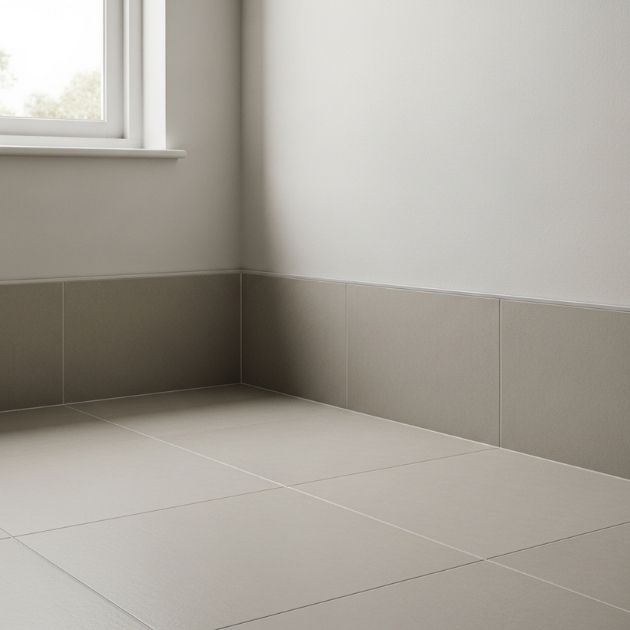
Sometimes the most effective design choice is restraint. Neutral-toned tile baseboards in shades of white, greige, warm beige, or soft grey anchor the room without competing with other design elements. This approach works across every bathroom style, from modern farmhouse to Scandinavian to mid-century modern.
Neutral baseboards also give you tremendous flexibility if you ever want to update your wall color, towels, or accessories. The baseboard stays timeless while the rest of the decor evolves around it.
These products might be useful:
- White matte ceramic baseboard tiles
- Warm greige porcelain floor trim
- Light grey subway baseboard strips
Decorative Edges for Flair
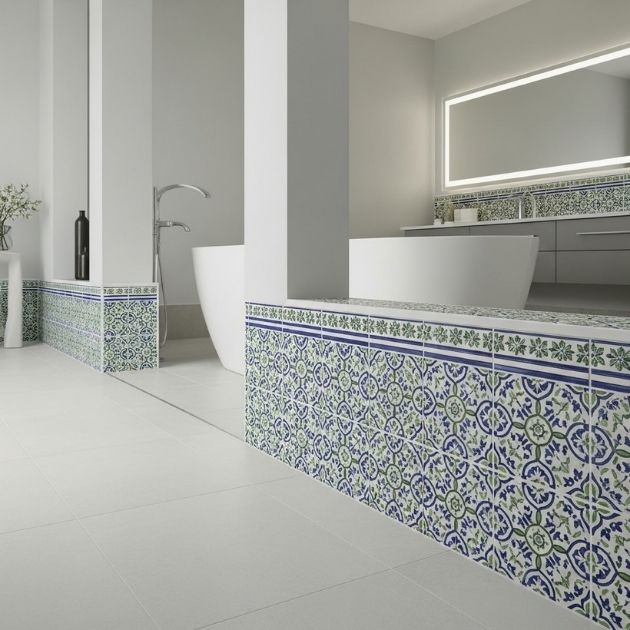
A pencil liner, rope trim, or ornate border tile used as a baseboard adds architectural interest that elevates the entire room. Decorative edge tiles were popular in Victorian and Edwardian bathrooms, but modern versions bring that elegance into contemporary spaces with cleaner proportions and updated finishes.
Gold, brushed nickel, or matte black metallic edge tiles are trending for good reason. They frame the floor beautifully and create a finished, polished look that feels intentional and high-end.
You might like:
- Brushed brass pencil liner tile trim
- Scalloped ceramic border tiles
- Matte black metal edge trim strips
Height Variation for Drama
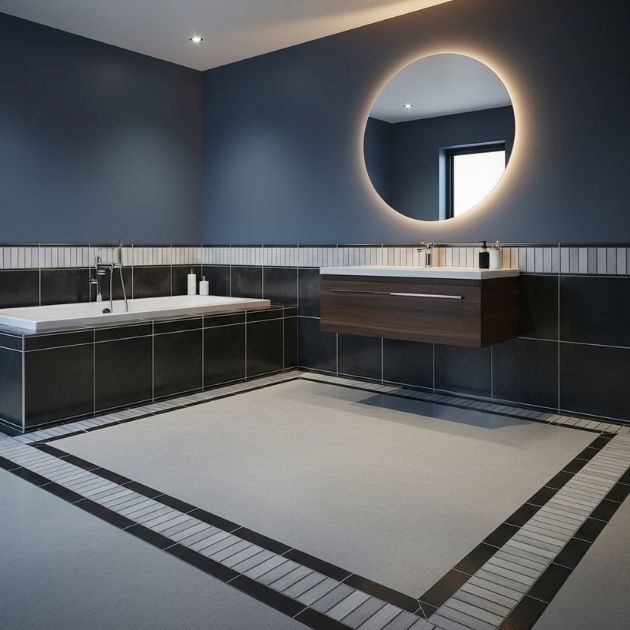
Standard baseboards sit at around three to four inches tall. But pushing that height upward to six, eight, or even twelve inches creates a dramatic, architectural effect. Taller tile baseboards visually elongate walls and add a hotel-like grandeur to residential bathrooms.
If you have high ceilings, a taller baseboard keeps proportions balanced. In a bathroom with standard ceiling height, a taller baseboard can still work beautifully if you keep the rest of the design simple.
Check if these fit your needs:
- Six-inch tall porcelain skirting tiles
- Extended subway tile baseboard panels
- Large-format baseboard tiles in 4×12 inch format
Mosaic Patterns for Artistry
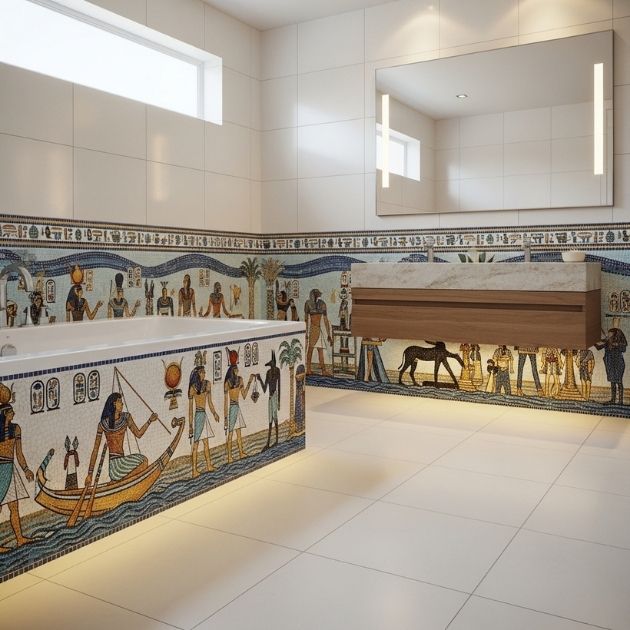
Mosaic tile baseboards transform a purely functional element into genuine artwork. Whether you choose glass mosaics, ceramic chip mosaics, or natural stone mosaics, the small-scale patterns add an intricate richness that catches the eye without overwhelming the space.
Mosaic baseboards work beautifully alongside plain, larger-format wall tiles because the contrast in scale creates visual balance. They are also a great way to introduce color or pattern in a controlled, subtle way.
A few helpful options:
- Ceramic mosaic tile sheets in mesh backing
- Glass mosaic baseboard strips in iridescent finish
- Pebble stone mosaic tile liner
Wood-Look Tiles for Warmth
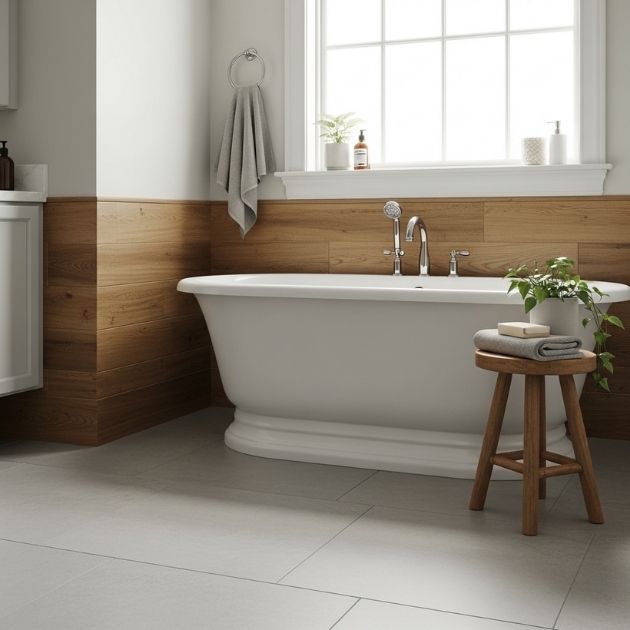
Real wood and bathrooms are not the best combination, but wood-look porcelain tiles bring all the warmth and character of timber with none of the moisture problems. Using wood-look tiles as a baseboard creates a natural, organic feel that softens the often sterile look of a bathroom.
Pair wood-look baseboard tiles with white or light grey walls for a clean, Scandinavian-inspired space, or use them alongside earthy stone tiles for a rustic, spa-like retreat.
Consider these options:
- Waterproof wood-look vinyl plank baseboards
- Porcelain wood-effect skirting tiles
- Oak-tone ceramic floor trim
Geometric Shapes for Modernity
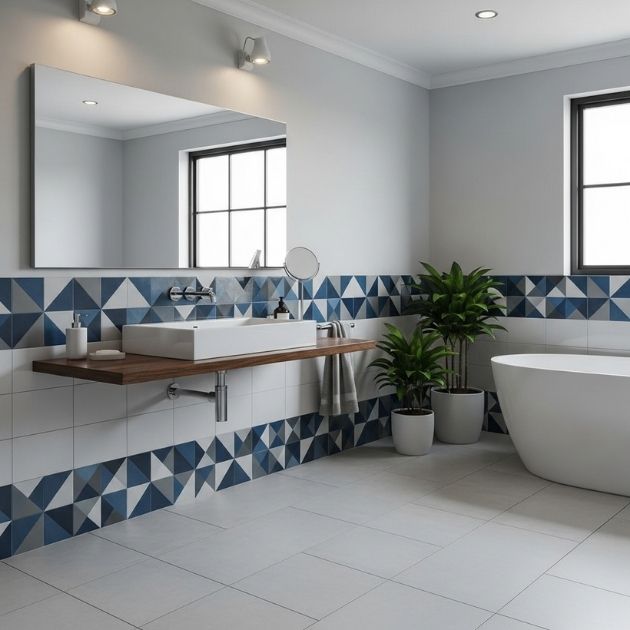
Hexagons, chevrons, diamonds, and arabesque shapes are not just for floors. Using geometric tiles as a baseboard injects modern energy into the bathroom design and signals a confident, design-forward sensibility.
A row of small hexagonal tiles along the base of the wall creates a subtle honeycomb effect that nods to current trends while remaining sophisticated. Pair with simple rectangular wall tiles for a balanced, contemporary result.
Give these a look:
- Geometric patterned tile border packs
- Hexagonal ceramic baseboard strips
- Diamond-cut porcelain trim tiles
Terrazzo Tiles for a Retro Vibe
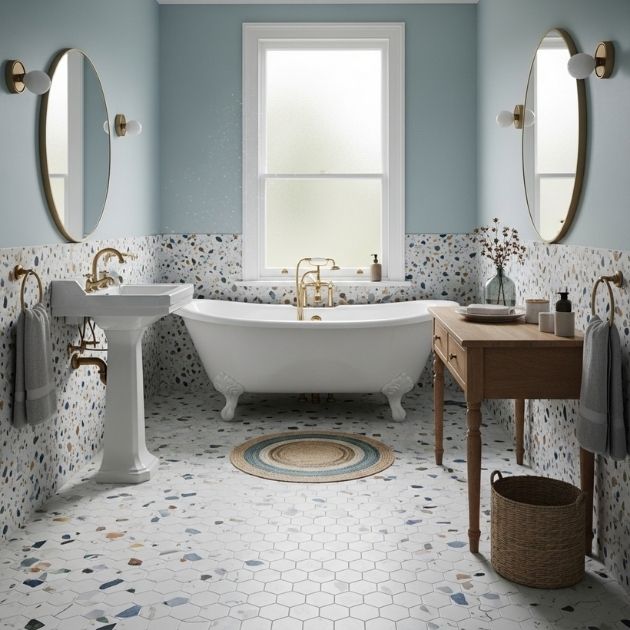
Terrazzo is having a well-deserved comeback in bathroom design. This composite material, featuring chips of marble, quartz, or glass set in a cement or resin binder, brings a playful speckled texture that works in both retro-inspired and contemporary bathrooms.
Terrazzo baseboard tiles pair beautifully with neutral walls and simple fixtures, letting their natural pattern become the focal point. The material is also extremely durable and easy to clean, making it a practical choice for high-humidity spaces.
Useful items to consider:
- Terrazzo tile sheets in pastel speckle
- Adhesive terrazzo baseboard strips
- Terrazzo-look porcelain trim
Vintage Charm with Classic Tiles
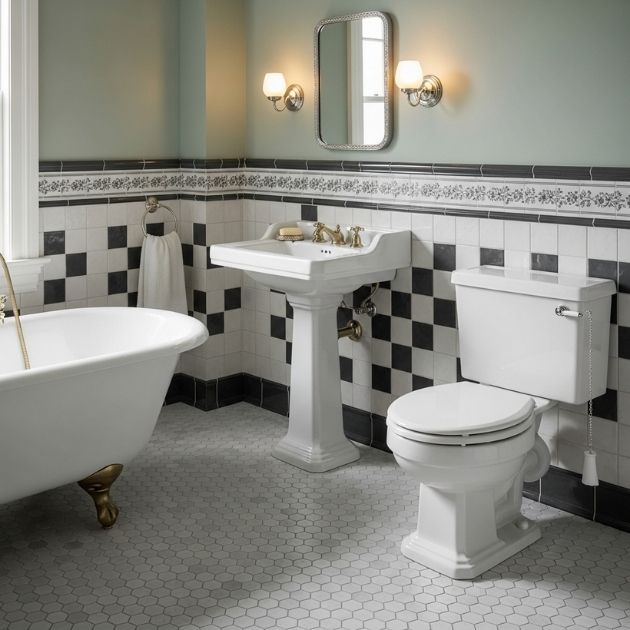
Classic encaustic tiles, subway tiles with a crackle glaze, or Victorian-style patterned tiles used as a baseboard instantly transport your bathroom into another era. The lived-in charm of vintage-style tiles adds warmth, history, and character to an otherwise plain space.
These tiles look especially striking when paired with clawfoot tubs, pedestal sinks, or antique brass fixtures. For a more subtle vintage nod, a simple crackle-glaze white tile used only at the baseboard adds texture without overwhelming a modern bathroom.
Possibly helpful picks:
- Vintage patterned ceramic encaustic tiles
- Crackle-glaze white subway baseboard tiles
- Retro-style porcelain skirting tiles
Bold Patterns for Impact
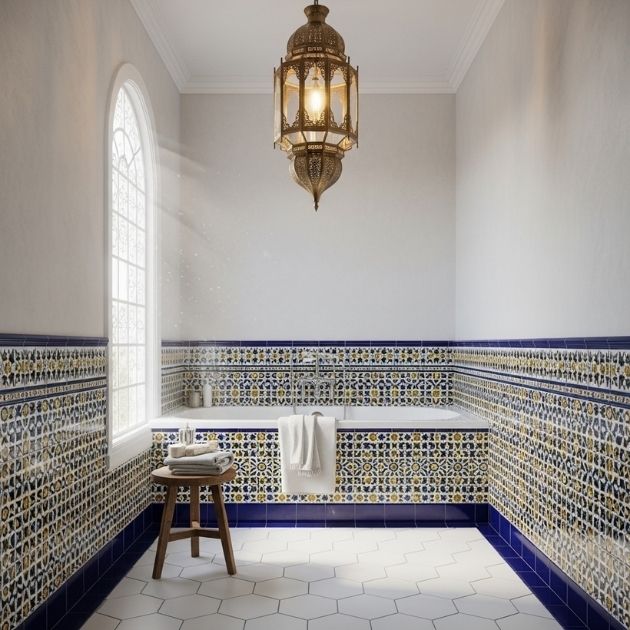
If you have a simple, neutral bathroom and want to introduce personality without a full redesign, a bold patterned tile baseboard is one of the most effective ways to do it. Moroccan-inspired prints, graphic black-and-white patterns, and vivid blue Delft-style tiles used as a baseboard strip create a striking focal element at floor level.
Keep the walls and fixtures simple so the patterned baseboard reads as a deliberate design choice rather than visual noise. This approach works particularly well in powder rooms where you want a big impression in a small space.
A few suggestions:
- Moroccan-inspired ceramic border tiles
- Bold graphic patterned baseboard strips
- Handmade-style painted tile liner
Eco-Friendly Options for Sustainability
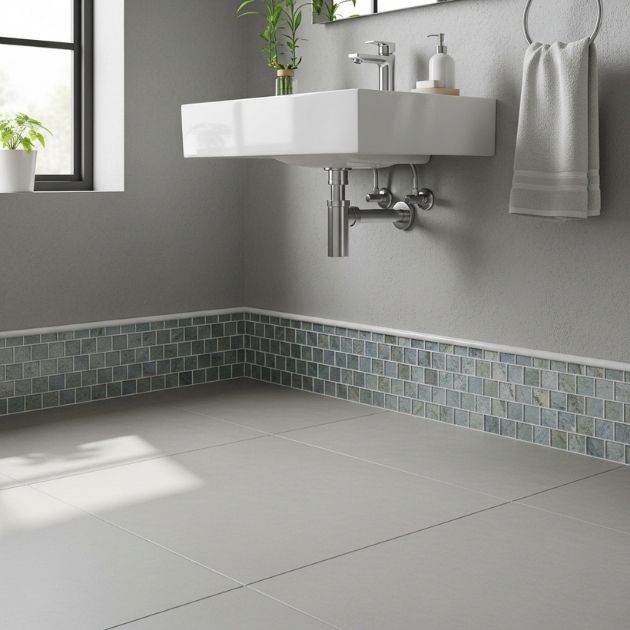
Sustainability is increasingly influencing bathroom design choices, and tile baseboards are no exception. Recycled ceramic tiles, reclaimed stone, cork tiles, and tiles made from low-VOC materials let you create a beautiful bathroom while reducing your environmental footprint.
Many eco-friendly tile manufacturers now produce stunning options that are indistinguishable from conventional tiles in terms of appearance and performance. Choosing sustainable materials is a choice you can feel good about for the long term.
Some ideas to consider:
- Recycled ceramic baseboard tiles
- Eco-friendly cork floor tile strips
- Low-VOC grout and tile adhesive for green installation
Frequently Asked Questions
What is the best tile material for bathroom baseboards?
Porcelain and glazed ceramic are the top choices because both resist moisture, staining, and heavy foot traffic. Natural stone works beautifully but requires regular sealing.
How tall should tile baseboards be in a bathroom?
Standard height is three to four inches, but many designers now recommend six to eight inches for a more dramatic and proportional look.
Can I use floor tiles as baseboard tiles?
Yes, many homeowners use the same floor tile cut into strips for a seamless, unified appearance. Bullnose-edge versions give a cleaner finished edge.
Do tile baseboards need to be grouted?
Yes, and caulking along the top edge where the tile meets the wall is equally important to prevent water from seeping behind the baseboard.
Are tile baseboards difficult to install as a DIY project?
Basic installations are manageable for confident DIYers. However, cutting precise angles and achieving perfectly level lines requires patience and the right tools. Hiring a professional is recommended for natural stone or intricate mosaic designs.
Final Thoughts
Tile baseboards are one of the smartest investments you can make in your bathroom renovation. They protect your walls, anchor your design, and add a layer of finish that elevates the entire room. Whether you are drawn to the warm character of wood-look tiles, the artistry of mosaics, the timeless luxury of natural stone, or the playful energy of geometric patterns, there is a tile baseboard idea here that fits your vision. Start with the style that excites you most, consider your bathroom’s existing palette, and do not underestimate how much this small detail can change the feel of the whole room.